Day-O (The Banana Boat Song) – Complete Analysis
Introduction
Thesis statement
“Day-O (The Banana Boat Song)” represents far more than a catchy calypso tune; it serves as a profound document of Caribbean labor history and cultural identity that transcends its commercial success to become a vehicle for understanding the complexities of post-colonial work, community, and artistic expression. Harry Belafonte’s 1956 recording transformed a traditional Jamaican work song into a global phenomenon, yet the song’s deeper significance lies in its authentic portrayal of the banana dock workers’ experience in Jamaica during the early 20th century. The repetitive structure mirrors the monotonous nature of manual labor, while the urgent plea for daylight reveals the workers’ exhaustion and desire for freedom from their arduous nighttime shifts. Through its call-and-response format, the song preserves the communal spirit that sustained these laborers through physically demanding work. Belafonte’s interpretation, while popularizing the song internationally, also served as an early example of world music crossover that maintained cultural authenticity. The song’s enduring appeal stems from its universal themes of work, community, and the human desire for rest and home, making it a timeless anthem that speaks to laborers across cultures and generations.
Brief introduction to the song and artist
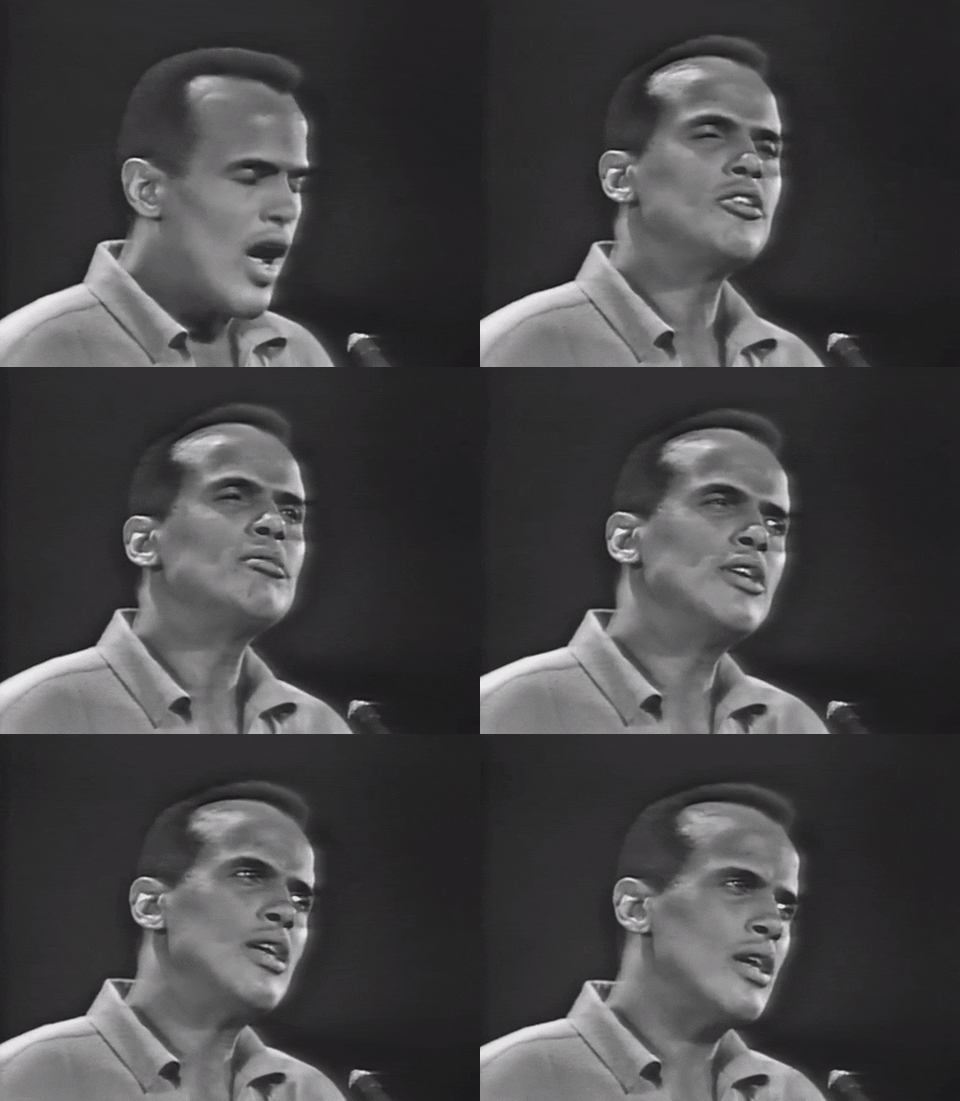
Harry Belafonte, born in New York City to Jamaican immigrants, emerged as one of America’s most influential entertainers of the 1950s, earning the nickname “King of Calypso” through his popularization of Caribbean music in mainstream American culture. His 1956 album “Calypso,” featuring “Day-O,” became the first LP to sell over one million copies, marking a watershed moment in American popular music. Belafonte’s unique position as a Caribbean-American artist allowed him to serve as a cultural bridge, introducing American audiences to the rich musical traditions of the West Indies while maintaining respect for their origins. His background in both theater and folk music provided him with the performance skills and cultural sensitivity necessary to authentically interpret traditional Caribbean songs. The artist’s commitment to civil rights activism also informed his musical choices, as he consistently used his platform to highlight the experiences of marginalized communities. “Day-O” exemplified this approach, transforming a work song born from economic necessity into a celebration of Caribbean culture and resilience. Belafonte’s interpretation preserved the song’s essential character while making it accessible to international audiences, demonstrating his skill as both entertainer and cultural ambassador.
Context of the song’s creation and release
“Day-O” originated as a traditional Jamaican work song sung by banana dock workers during the early 1900s, emerging from the practical need to coordinate heavy lifting and maintain morale during grueling overnight shifts at Caribbean ports. The song was part of a rich tradition of work songs that served multiple functions: synchronizing physical labor, providing entertainment during monotonous tasks, and creating a sense of community among workers facing difficult conditions. When Belafonte recorded the song in 1956, America was experiencing significant social changes, including the early stages of the civil rights movement and increasing interest in international cultures following World War II. The timing coincided with the rise of long-playing records, which allowed for more diverse musical programming and helped world music find commercial success in American markets. Belafonte’s recording was part of his broader mission to introduce American audiences to Caribbean culture, following his successful performances of calypso music in New York nightclubs. The song’s release came during the height of the Cold War, when American culture was becoming more internationally minded, and exotic music provided an escape from domestic tensions. The recording session itself reflected Belafonte’s commitment to authenticity, as he worked with Caribbean musicians and maintained the song’s traditional call-and-response structure.
Overview of the song’s reception and impact
Upon its release, “Day-O” achieved immediate commercial success in the United States, reaching number five on the Billboard charts and helping Belafonte’s “Calypso” album dominate the charts for 31 consecutive weeks. The song’s infectious rhythm and memorable chorus made it a staple of American popular culture, appearing in countless films, television shows, and commercials over the subsequent decades. Its impact extended beyond entertainment, introducing millions of Americans to Caribbean music and culture during a period when such exposure was limited. The song became a gateway for other calypso and world music artists to find American audiences, effectively launching the world music movement in mainstream American culture. Radio stations initially struggled to categorize the song, ultimately creating new programming formats to accommodate its unique sound. The recording’s success challenged the music industry’s conventional wisdom about American audiences’ receptivity to non-English dialects and foreign musical styles. Critics praised Belafonte’s respectful treatment of the traditional material, noting his ability to maintain authenticity while achieving commercial appeal. The song’s enduring popularity has made it one of the most recognizable pieces of Caribbean music worldwide, serving as many people’s first introduction to the rich musical traditions of the West Indies and cementing Belafonte’s legacy as a pioneering world music artist.
Lyrical analysis
Breakdown of the song’s lyrics
The lyrics of “Day-O” follow a traditional call-and-response structure that reflects its origins as a work song, with the lead singer calling out verses and the group responding with the central refrain “Daylight come and me wan’ go home.” This repetitive pattern serves multiple purposes: it creates a hypnotic rhythm that matches the repetitive nature of dock work, provides a communal element that bonds workers together, and establishes an urgent plea for the end of the work shift. The opening “Day-o, day-o” serves as both a greeting to the dawn and a celebration of the approaching end of labor, while the phrase “me wan’ go home” expresses the universal desire for rest and family after exhausting work. The verses detail specific aspects of banana loading: “Stack banana ’til de mornin’ come” describes the endless nature of the task, while “Come, mister tally man, tally me banana” references the supervisor who counts the workers’ production for payment. The measurements “six foot, seven foot, eight foot bunch” emphasize the impressive size of banana stalks and the physical strength required to handle them. The warning about the “deadly black tarantula” hidden among the “beautiful bunch o’ ripe banana” adds an element of danger to the work, highlighting the risks faced by dock workers. Throughout, the Caribbean dialect preserves the song’s authentic cultural voice while making the lyrics accessible to international audiences through their rhythmic and repetitive nature.
Top five most used words in the lyrics
The most frequently appearing words in “Day-O” reveal the song’s central themes and concerns. “Daylight” appears most often, emphasizing the workers’ anticipation of dawn and the end of their shift, representing hope and liberation from labor. “Come” is repeated throughout, both in reference to daylight’s arrival and in calling the tally man, suggesting both anticipation and urgency. “Home” represents the ultimate destination and desire of the workers, symbolizing rest, family, and personal space away from labor. “Banana” appears frequently, identifying the specific product being handled and grounding the song in its Caribbean agricultural context. “Day” variations (including “day-o”) create the song’s rhythmic foundation while reinforcing the temporal focus on the approaching end of work. These word choices create a focused narrative that captures the essential elements of the dock workers’ experience: the product they handle, the time they work, their supervision, and their ultimate goal of returning home. The repetition of these key terms mirrors the repetitive nature of the work itself while creating a hypnotic quality that makes the song memorable and singable. This linguistic economy reflects the practical origins of work songs, where simple, repeated phrases must carry complex emotional and social meanings while remaining easy to remember and sing during physical labor.
Exploration of themes and motifs
Three major themes dominate “Day-O”: labor and economic necessity, community and solidarity, and the tension between work and personal freedom. The theme of labor permeates every verse, from the specific tasks described (“Stack banana,” “Lift six foot, seven foot, eight foot bunch”) to the temporal framework of working “all night” until daylight comes. This isn’t romanticized work but rather the harsh reality of physical labor performed for survival, with the tally man’s presence reminding listeners of the economic transactions underlying the workers’ efforts. The community theme emerges through the call-and-response structure, which creates a sense of shared experience and mutual support among workers facing difficult conditions together. The collective voice that responds to each verse represents the solidarity necessary for both physical and emotional survival in challenging work environments. The tension between work obligations and personal desires forms the song’s emotional core, with “me wan’ go home” serving as both literal desire and metaphorical expression of the human need for rest, family, and personal space. This theme resonates universally, speaking to anyone who has felt trapped by economic necessity while longing for personal freedom. The song’s genius lies in how it transforms this tension into a celebratory anthem, finding joy and community within the constraints of necessary labor while maintaining hope for eventual liberation.
Use of literary devices
“Day-O” employs several literary devices that enhance its emotional impact and memorability. Repetition serves as the primary structural device, with the refrain “Daylight come and me wan’ go home” appearing after nearly every verse, creating both rhythmic consistency and emotional emphasis. This technique mirrors the repetitive nature of dock work while reinforcing the workers’ central desire. Alliteration appears in phrases like “beautiful bunch” and “deadly… tarantula,” adding musical quality to the lyrics while making them more memorable for singers. The song uses synecdoche when “mister tally man” represents the entire management structure, reducing complex labor relations to a single figure who controls the workers’ compensation. Metaphor operates subtly throughout, with daylight representing not just the end of the work shift but freedom, hope, and renewal. The contrast between the “beautiful bunch o’ ripe banana” and the “deadly black tarantula” employs juxtaposition to highlight the hidden dangers within seemingly pleasant work. Personification gives agency to daylight, which “comes” rather than simply occurring, suggesting an active force working in the laborers’ favor. The Caribbean dialect functions as a form of linguistic authenticity that preserves the song’s cultural origins while creating rhythmic patterns that enhance its musical appeal. These devices work together to transform a simple work song into a sophisticated piece of folk poetry that operates on multiple emotional and intellectual levels.
Emotional journey mapping
The emotional arc of “Day-O” follows a pattern of anticipation, celebration, and collective affirmation that builds throughout the song’s duration. Beginning with the urgent call “Day-o, day-o,” the song establishes immediate anticipation for the approaching dawn and the end of labor. As verses progress through descriptions of work tasks and dangers, tension builds around the physical demands and risks of dock work, creating sympathy for the workers’ situation. The repeated refrain provides emotional release and collective hope, with each repetition of “me wan’ go home” reinforcing the workers’ shared desire for freedom and rest. The song reaches its emotional peak in the communal sections where multiple voices join the response, creating a sense of solidarity and shared purpose that transforms individual struggle into collective strength. The final repetitions provide resolution and affirmation, with the persistent rhythm and repeated calls suggesting that while the work continues, so does the workers’ hope and community spirit. This emotional journey transforms what could be a lament about difficult working conditions into an celebration of human resilience and community solidarity.
Musical composition
Technical analysis
“Day-O” is structured in a traditional calypso format with a moderate tempo of approximately 120 beats per minute, built around a simple but effective chord progression that emphasizes the song’s rhythmic drive over harmonic complexity. The song is typically performed in the key of E major, which provides a bright, uplifting tonality that contrasts with the serious subject matter of labor and hardship. The basic chord progression follows an E-A-B-E pattern that repeats throughout most of the song, with occasional variations that add harmonic interest without disrupting the hypnotic quality essential to work songs. The melody is deliberately simple and repetitive, designed to be easily learned and sung by groups of workers who would not have formal musical training. The vocal range spans approximately one octave, making it accessible to singers of varying abilities while the stepwise motion of the melody ensures it remains singable even during physical exertion. Rhythmically, the song employs syncopated patterns characteristic of Caribbean music, with emphasis on off-beats that create the distinctive “swing” feel associated with calypso. The call-and-response structure is reflected in the musical arrangement, with solo verses alternating with group choruses that feature multiple vocal parts. The repetitive nature of both melody and rhythm serves the practical purpose of work songs while creating the hypnotic quality that makes the song compelling for listeners. This technical simplicity is actually a mark of sophistication, as the song achieves maximum emotional impact through minimal musical means.
Instrumentation breakdown
Belafonte’s recording of “Day-O” features a carefully selected ensemble that authentically represents Caribbean musical traditions while remaining accessible to American audiences. The percussion section forms the rhythmic foundation, with congas and bongos providing the distinctive Caribbean rhythm patterns that drive the song forward. These instruments create the polyrhythmic complexity characteristic of Afro-Caribbean music while maintaining the steady pulse necessary for work coordination. The acoustic guitar provides harmonic support and rhythmic accompaniment, playing in a style that emphasizes the syncopated patterns essential to calypso music. A string bass walks through the chord changes, providing harmonic foundation while adding to the rhythmic drive through its syncopated playing style. Steel drums, though not prominent in Belafonte’s version, add coloristic touches that specifically identify the music’s Caribbean origins. The vocal arrangement features Belafonte as the primary soloist with a backing chorus that represents the communal response element crucial to work song traditions. Each instrument serves a specific function: percussion maintains the work rhythm, guitar and bass provide harmonic structure, and the vocals carry the emotional content. The arrangement deliberately avoids overwhelming the traditional elements with excessive instrumentation, preserving the song’s authentic character while ensuring professional production quality. This balanced approach allows each instrument to contribute to the overall texture while maintaining the clarity necessary for the song’s message to be understood by diverse audiences.
Vocal analysis
Belafonte’s vocal performance on “Day-O” demonstrates his exceptional ability to balance authenticity with accessibility, employing traditional Caribbean vocal techniques while maintaining clarity for international audiences. His voice exhibits the warm, resonant qualities characteristic of calypso singing, with careful attention to the rhythmic delivery that makes the lyrics dance with the instrumental accompaniment. The vocal timbre combines smoothness with earthiness, reflecting both Belafonte’s formal training and his cultural connections to the material. His pronunciation preserves the Caribbean dialect essential to the song’s authenticity while ensuring comprehensibility for listeners unfamiliar with the language patterns. The dynamics of his performance build throughout the song, beginning with relatively restrained verses and building to more energetic choruses that invite audience participation. Belafonte’s use of vocal inflection adds emotional depth to simple lyrics, with subtle variations in tone and emphasis that convey the workers’ fatigue, hope, and community spirit. The call-and-response sections showcase his ability to lead a group vocal performance, maintaining energy and encouraging participation from the backing singers. His breathing techniques accommodate the song’s repetitive structure without showing strain, demonstrating the stamina necessary for work song performance. The overall vocal approach reflects Belafonte’s understanding that effective folk music performance requires both technical skill and cultural sensitivity, preserving traditional elements while adapting them for contemporary presentation. This balance made his version definitive while respecting the song’s origins.
Production techniques
The production of Belafonte’s “Day-O” reflects mid-1950s recording technology while employing techniques that enhance the song’s traditional character and commercial appeal. The recording was made using multi-track technology that allowed for careful balance between solo vocals, group responses, and instrumental accompaniment. The engineering emphasizes clarity and presence, with each element of the arrangement occupying its own sonic space without losing the cohesive group sound essential to the song’s communal character. Reverb is used judiciously to add warmth and space without obscuring the lyrics or rhythmic precision. The mix places Belafonte’s voice prominently while ensuring that group responses and instrumental solos remain audible and impactful. Dynamic range is carefully managed to maintain energy throughout the song while allowing for expressive variations that highlight emotional peaks. The production captures the live, participatory quality of calypso performance while providing the polish expected in commercial recordings of the era.
Cultural and social context
Historical context
“Day-O” emerged from the historical reality of Caribbean banana plantations and dock work during the early 20th century, when the United Fruit Company and other American corporations dominated Central American and Caribbean agriculture through practices that often exploited local workers. The banana trade represented a crucial example of colonial and neo-colonial economic relationships, with American companies extracting profit from Caribbean labor while providing minimal compensation to workers. During this period, dock work was performed primarily by men of African descent who had limited economic alternatives and faced dangerous working conditions with little legal protection. The night shift pattern referenced in the song was common practice, as ships needed to be loaded quickly to maintain freshness of the produce during transport to American markets. Work songs like “Day-O” developed as coping mechanisms that helped workers coordinate physically demanding tasks while maintaining morale and community connections. The practice of having a “tally man” count production for payment was standard in the industry, representing the quantification of human labor that characterized industrial agriculture. When Belafonte recorded the song in 1956, the civil rights movement was gaining momentum in the United States, and his presentation of this work song served as a subtle commentary on labor exploitation and racial inequality. The song’s success coincided with increasing American awareness of international labor issues and growing interest in the experiences of people of color both domestically and internationally.
Artist’s personal context
Harry Belafonte’s personal background uniquely positioned him to authentically interpret “Day-O” while making it accessible to mainstream American audiences. Born in Harlem to a Jamaican mother and Martinican father, Belafonte spent part of his childhood in Jamaica, giving him direct exposure to the Caribbean culture and music that would later define his career. His experiences with both Caribbean and American cultures provided him with the linguistic skills and cultural sensitivity necessary to respectfully adapt traditional songs for international audiences. Belafonte’s involvement in theater and his training at the American Negro Theatre developed his performance abilities while deepening his understanding of how art could serve social purposes. His commitment to civil rights activism informed his musical choices, as he consistently used his platform to highlight issues of racial and economic justice. The artist’s success in mainstream entertainment allowed him to introduce Caribbean culture to audiences who might otherwise have had no exposure to it, serving as a cultural ambassador during a period of limited international cultural exchange. His personal experiences with discrimination and economic struggle helped him connect emotionally with the labor themes in “Day-O,” while his artistic training enabled him to present these themes in ways that were both entertaining and meaningful. Belafonte’s interpretation of the song reflected his broader mission to use popular culture as a vehicle for promoting understanding and social change, making “Day-O” part of his larger project of cultural education and social activism.
Societal impact
“Day-O” significantly influenced American popular culture by introducing mainstream audiences to Caribbean music and culture during the 1950s, a period when such exposure was limited and often filtered through stereotypical representations. The song’s success challenged assumptions about American audiences’ receptivity to non-English dialects and foreign musical styles, paving the way for greater cultural diversity in popular music. Its impact extended beyond entertainment, contributing to increased awareness of Caribbean culture and labor issues among American listeners who had little previous exposure to these topics. The song became a cultural touchstone that appeared in countless films, television shows, and commercials, often serving as shorthand for tropical or Caribbean themes while sometimes perpetuating superficial understandings of the culture it represented. Educational institutions began including the song in music curricula as an example of world music and cultural exchange, though sometimes without sufficient attention to its serious social content. The recording’s success contributed to the development of the world music industry, demonstrating that authentic cultural expression could achieve commercial success without complete assimilation to American musical norms. The song also influenced the civil rights movement by providing a model for how traditional African diasporic culture could be presented in mainstream contexts while maintaining dignity and authenticity. Its enduring popularity has made it one of the most recognizable examples of Caribbean music worldwide, though this fame has also led to oversimplification of the complex cultural and social issues it originally addressed.
Legacy and covers
The legacy of “Day-O” extends far beyond Belafonte’s original recording, with the song becoming a standard that has been covered by artists across multiple genres and generations. Notable interpretations include versions by folk groups during the 1960s protest movement, who emphasized the song’s labor themes, and pop artists who focused on its entertainment value. The song’s appearance in films like “Beetlejuice” introduced it to new generations while sometimes divorcing it from its cultural context. Steel drum bands and Caribbean artists have reclaimed the song as part of their cultural heritage, often performing it in styles that emphasize its traditional roots. Educational institutions have used the song to teach about Caribbean culture, work songs, and cultural appropriation, though with varying degrees of sensitivity to its complex social meanings. The song has become a staple of world music festivals and cultural celebrations, serving as an accessible entry point for audiences exploring Caribbean music. Contemporary artists have sampled or referenced the song in hip-hop and electronic music, demonstrating its continued relevance and adaptability. The song’s rhythmic structure has influenced other popular songs, contributing to mainstream music’s incorporation of Caribbean rhythmic elements. However, its ubiquity has also led to trivialization, with the song sometimes reduced to a novelty number that obscures its serious social content. Recent scholarship and performances have attempted to restore understanding of the song’s historical context and cultural significance, recognizing it as an important document of Caribbean labor history and cultural expression.
Philosophical comparison
Western philosophy connections
“Day-O” resonates strongly with Western philosophical concepts of labor, alienation, and human dignity that were central to 19th and 20th-century thought. The song’s depiction of repetitive, physically demanding work connects to Karl Marx’s analysis of alienated labor, where workers become disconnected from the products of their work and reduced to instruments of production. The tally man figure represents the commodification of human labor that Marx identified as central to capitalist exploitation, with workers’ humanity reduced to quantifiable output. The song’s emphasis on community and collective response reflects philosophical traditions of solidarity and mutual aid that philosophers like Peter Kropotkin identified as essential human characteristics. The workers’ desire to “go home” can be understood through existentialist concepts of authenticity and the search for meaningful existence beyond economic necessity. The temporal structure of the song, with its focus on the anticipation of daylight, connects to philosophical discussions of time, hope, and human temporality found in thinkers like Henri Bergson and Martin Heidegger. The preservation of cultural identity through song relates to philosophical discussions of tradition and modernity, particularly how communities maintain identity while adapting to changing economic conditions. The song’s function as both practical coordination tool and artistic expression reflects philosophical debates about the relationship between utility and aesthetics that have engaged thinkers from Immanuel Kant to John Dewey. The democratic participation enabled by the call-and-response structure embodies philosophical ideals of participatory democracy and collective decision-making that have been central to political philosophy since ancient Greece.
Eastern philosophy connections
The cyclical structure and repetitive nature of “Day-O” align with Eastern philosophical concepts of cyclical time and the rhythm of natural processes found in Hindu and Buddhist traditions. The song’s acceptance of work as a necessary part of life while maintaining hope for transcendence reflects Buddhist concepts of right livelihood and the middle way between extreme asceticism and indulgence. The collective response structure mirrors Confucian ideals of social harmony and the importance of community cooperation in achieving both individual and social well-being. The workers’ endurance through difficult conditions while maintaining dignity connects to Taoist concepts of wu wei, or effortless action, where acceptance of circumstances enables effective response rather than futile resistance. The song’s emphasis on dawn and renewal reflects Hindu concepts of cyclical time and rebirth, with each new day representing opportunity for spiritual and material regeneration. The communal singing practice embodies Sikh traditions of collective worship and mutual support through shared spiritual practice. The integration of work and song reflects Zen Buddhist concepts of mindfulness and finding the sacred within ordinary activities, transforming mundane labor into meaningful practice. The preservation of traditional knowledge through oral transmission connects to Eastern philosophical emphasis on the wisdom of elders and the importance of maintaining cultural continuity. The song’s ability to transform suffering into celebration relates to Buddhist concepts of transforming negative emotions into wisdom and compassion. The participatory nature of the performance reflects Eastern philosophical emphasis on the interconnectedness of all beings and the importance of community in individual spiritual development.
Religious and spiritual themes
“Day-O” contains several elements that resonate with religious and spiritual traditions, though these themes operate subtly within the framework of a work song. The anticipation of daylight carries spiritual connotations of divine intervention and redemption, with dawn representing hope, renewal, and deliverance from darkness that appears in many religious traditions. The collective response structure mirrors call-and-response patterns found in African American spirituals and various religious traditions worldwide, where community participation in sacred music creates spiritual unity and mutual support. The endurance through suffering while maintaining hope reflects spiritual themes of perseverance and faith found in Christianity, Judaism, Islam, and other traditions that emphasize the transformative power of suffering when approached with proper attitude. The communal nature of the song’s performance embodies spiritual concepts of fellowship and mutual aid that are central to most religious traditions. The workers’ acceptance of their circumstances while maintaining dignity reflects spiritual traditions of finding meaning and purpose within difficult conditions rather than seeking escape through denial or despair. The song’s function as both practical tool and artistic expression relates to spiritual concepts of finding the sacred within ordinary activities and transforming mundane work into meaningful practice. The preservation of cultural identity through traditional song connects to religious concepts of maintaining faith and community identity across generations. The cyclical structure and repetitive nature of the song mirror spiritual practices of chanting and meditation found in various traditions.
Psychological perspectives
From psychological perspectives, “Day-O” demonstrates several important principles of human motivation, social behavior, and coping mechanisms. The song serves as an example of how music functions as a psychological tool for managing stress, maintaining morale, and creating social cohesion among individuals facing challenging circumstances. The repetitive structure provides psychological comfort through predictability while the rhythmic elements help synchronize group behavior and create feelings of unity and shared purpose. The call-and-response format demonstrates psychological principles of social learning and group dynamics, where individual expression is supported and reinforced by community participation. The anticipation of daylight and the desire to “go home” reflect basic psychological needs for security, belonging, and self-actualization that Abraham Maslow identified as fundamental human motivations. The song’s ability to transform difficult working conditions into a source of cultural pride and community identity illustrates psychological concepts of resilience and post-traumatic growth. The preservation of traditional forms while adapting to new contexts demonstrates psychological flexibility and cultural adaptation strategies that help communities maintain mental health during periods of change and stress. The participatory nature of the performance provides psychological benefits through social connection and collective efficacy that research has shown to be essential for mental health and community well-being.
Conclusion
Summary of findings
This analysis of “Day-O (The Banana Boat Song)” reveals a work of remarkable complexity that operates simultaneously as historical document, cultural expression, and artistic achievement. The song’s origins as a traditional Jamaican work song provided authentic foundation for themes of labor, community, and cultural identity that Belafonte successfully adapted for international audiences. The lyrical analysis demonstrates how simple, repetitive elements can carry profound emotional and social meaning, with the call-and-response structure serving both practical coordination functions and deeper community-building purposes. The musical composition reveals sophisticated use of Caribbean rhythmic and melodic elements that maintain cultural authenticity while achieving commercial accessibility. The cultural and social context analysis shows how the song emerged from specific historical circumstances of Caribbean labor exploitation while achieving broader significance as a document of human dignity and resilience. The philosophical comparisons demonstrate the song’s relevance to fundamental questions about work, community, and human meaning that have engaged thinkers across cultures and centuries. The production techniques and performance elements show how traditional cultural forms can be preserved and transmitted through modern media while maintaining their essential character. The song’s enduring popularity and continuing relevance suggest its success in capturing universal themes within specific cultural expression, making it both a valuable historical document and a continuing source of artistic inspiration.
Personal interpretation
“Day-O” represents to me a powerful example of how art can transform necessity into beauty and individual struggle into collective strength. The song’s genius lies not in its simplicity but in its ability to find joy and community within the constraints of difficult labor, creating celebration from circumstances that could easily produce only complaint or despair. Belafonte’s interpretation serves as a bridge between cultures that respects the original context while making its universal themes accessible to broader audiences. The song demonstrates how traditional cultural forms can maintain their authenticity while adapting to new contexts and technologies, preserving essential elements while finding new expressions. I find the song’s treatment of time particularly compelling, with its focus on the anticipation of daylight representing hope and renewal that transcends the specific context of dock work to speak to anyone who has endured difficult circumstances while maintaining faith in eventual relief. The participatory nature of the song creates a model for democratic cultural expression where individual voices are supported and amplified by community response. The song’s continuing relevance suggests its success in capturing something essential about human experience that transcends specific cultural and historical contexts. For me, “Day-O” represents the best of what popular culture can achieve: entertainment that educates, cultural exchange that respects differences, and artistic expression that finds beauty and meaning within the realities of human labor and community.
Critical evaluation
As an artistic achievement, “Day-O” succeeds remarkably in balancing multiple complex objectives: cultural authenticity, commercial accessibility, social commentary, and entertainment value. The song’s technical elements work effectively to serve its thematic content, with musical choices that support rather than overshadow the cultural and social meanings. Belafonte’s performance demonstrates exceptional skill in adapting traditional material for contemporary presentation while maintaining respect for its origins and meanings. The song’s enduring popularity provides evidence of its artistic success, though this success has sometimes led to oversimplification of its serious social content. The recording quality and production values meet professional standards while preserving the participatory character essential to work song traditions. The arrangement successfully incorporates authentic Caribbean musical elements without resorting to exotic stereotypes or superficial cultural appropriation. However, the song’s commercial success has sometimes obscured its serious social commentary, with later uses in popular culture often emphasizing entertainment value over historical and cultural significance. The song’s influence on later popular music demonstrates its artistic importance, though this influence has not always maintained the cultural sensitivity of Belafonte’s original interpretation. Critical evaluation must acknowledge both the song’s artistic achievements and the limitations inherent in adapting traditional cultural forms for commercial purposes. Overall, “Day-O” represents a successful example of how popular culture can serve educational and social purposes while maintaining artistic integrity and entertainment value.
 be-song-be-you.com
Leave a comment