Song Analysis: “Freedom” by Beyoncé
Introduction
Thesis statement
Beyoncé’s “Freedom” from her 2016 visual album Lemonade serves as a powerful anthem of Black liberation and personal empowerment that transcends individual struggle to address systemic oppression and collective resistance. The song functions as both a deeply personal confession of overcoming adversity and a broader political statement about African American experiences in contemporary America. Through its masterful blend of gospel, hip-hop, and R&B influences, “Freedom” creates a sonic landscape that mirrors the emotional journey from bondage to liberation. The track’s structure, featuring Kendrick Lamar’s provocative verse, establishes a dialogue between personal and political freedom that resonates with centuries of African American resistance narratives. The song’s placement within Lemonade as a pivotal moment of transformation demonstrates Beyoncé’s evolution from victim to victor, while simultaneously addressing broader themes of racial justice and social change. The repetitive nature of the freedom chant creates an almost ritualistic quality that connects to African American spiritual traditions and protest movements. By incorporating elements of field recordings and traditional spirituals, the song bridges historical and contemporary struggles for freedom, making it both timeless and urgently relevant to current social justice movements.
Brief introduction to the song and artist
“Freedom” represents a defining moment in Beyoncé Knowles-Carter’s artistic evolution, showcasing her transition from mainstream pop icon to cultural activist and social commentator. Released as part of the groundbreaking visual album Lemonade, the song demonstrates Beyoncé’s willingness to address complex themes of race, identity, and systemic oppression within American society. The track features a collaboration with Kendrick Lamar, one of hip-hop’s most socially conscious voices, creating a powerful dialogue between two of the most influential Black artists of their generation. Beyoncé’s artistic journey leading to this song reflects her growing awareness of her platform’s potential for social impact, moving beyond personal narratives to address collective struggles. The song’s placement within Lemonade serves as a climactic moment of empowerment following themes of betrayal, anger, and healing explored throughout the album. As an artist, Beyoncé had previously touched on themes of female empowerment, but “Freedom” marked a more explicit engagement with racial politics and social justice issues. The collaboration with Lamar adds layers of complexity, as his verse provides a street-level perspective on police brutality and systemic racism that complements Beyoncé’s more spiritual approach to liberation.
Context of the song’s creation and release
“Freedom” was created during a period of heightened racial tensions in America, with the Black Lives Matter movement gaining momentum following high-profile police killings of unarmed Black Americans. The song’s 2016 release coincided with nationwide protests and growing awareness of systemic racism, making its themes particularly resonant with contemporary audiences. The track was recorded during the production of Lemonade, an album that addressed both Beyoncé’s personal marital struggles and broader cultural issues affecting Black women in America. The song incorporates samples from a 1950s field recording by Alan Lomax, connecting contemporary struggles to historical narratives of African American resistance and resilience. This historical connection was intentional, as Beyoncé and her collaborators sought to create a bridge between past and present experiences of oppression and liberation. The visual component of the song, featuring mothers of victims of police violence, added another layer of political significance to its release. The song’s creation process involved extensive collaboration with writers and producers who understood the weight of its message and the cultural moment it sought to address. The timing of its release, during Barack Obama’s presidency but amid growing racial tensions, positioned the song as both a celebration of Black achievement and a call for continued progress.
Overview of the song’s reception and impact
“Freedom” was widely praised by critics and audiences as one of the most powerful tracks on Lemonade, earning recognition for its bold political messaging and musical innovation. The song’s impact extended beyond music charts, becoming an anthem for social justice movements and protests across America. Critics praised Beyoncé’s willingness to use her platform for political activism, with many noting the song’s authentic connection to African American musical traditions and contemporary struggles. The track’s influence was particularly notable in its adoption by various social justice organizations and protest movements, who used its message of liberation and resistance as a rallying cry. The song’s visual component, featuring powerful imagery of Black women and families affected by police violence, amplified its cultural impact and sparked important conversations about racial justice. Academic scholars and cultural critics analyzed the song’s significance within the broader context of Black feminist thought and artistic expression. The song’s success helped establish Beyoncé as not just an entertainer but a cultural activist willing to address controversial political topics. Its reception demonstrated the power of popular music to influence social discourse and mobilize communities around important issues. The song’s lasting impact continues to be felt in contemporary social justice movements and discussions about racial equality in America.
Lyrical analysis
Breakdown of the song’s lyrics
The lyrics of “Freedom” operate on multiple levels, beginning with personal declarations of independence and expanding to encompass broader themes of social justice and collective liberation. The opening lines establish a defiant tone with imagery of storms and rain, suggesting both cleansing and resistance against overwhelming forces. The repeated phrase “Tell the storm I’m new” indicates transformation and rebirth, while “painting white flags blue” subverts traditional symbols of surrender into declarations of strength. The central chorus, with its desperate plea “Freedom! Freedom! I can’t move / Freedom, cut me loose!” captures the paradox of feeling trapped while simultaneously fighting for liberation. The line “I break chains all by myself” emphasizes individual agency and self-determination, refusing to wait for external salvation. Kendrick Lamar’s verse introduces specific contemporary references to police violence and systemic oppression, grounding the song’s abstract concepts in concrete reality. His countdown from “Ten Hail Marys” to “Five-O asking me what’s in my possession” creates a narrative tension that mirrors the daily experiences of many African Americans. The verse’s references to “correctional gates” and “cast away oppression” explicitly connect personal struggle to larger systems of control and resistance. The song’s final section returns to spiritual themes with questions directed toward a divine father figure, suggesting that the quest for freedom encompasses both earthly and spiritual dimensions.
Top five most used words in the lyrics
The word frequency analysis reveals the song’s central themes through repetition and emphasis. “Freedom” appears most frequently, serving as both title and primary thematic focus, reinforced through the powerful chorus that repeats this word with increasing intensity. “I’m” and “I” appear frequently, emphasizing personal agency and individual determination in the face of adversity. The word “running” appears multiple times, suggesting both escape from oppression and active pursuit of liberation, creating a sense of movement and urgency throughout the song. “Tell” appears several times, indicating communication and declaration, as the narrator makes proclamations to various forces including storms, tides, and tears. “Open” appears in Lamar’s verse, suggesting the unlocking of barriers and the expansion of possibilities for freedom and justice. These recurring words create a linguistic pattern that reinforces the song’s themes of self-determination, movement, and communication. The repetition of “freedom” in particular creates an almost hypnotic quality that mirrors the chant-like nature of protest songs and spirituals. The frequency of first-person pronouns emphasizes individual responsibility and personal empowerment, while action words like “running” and “tell” suggest active resistance rather than passive acceptance of circumstances.
Exploration of themes and motifs
The primary theme of liberation permeates every aspect of the song, manifesting as both personal freedom from individual constraints and collective freedom from systemic oppression. The motif of water appears throughout, with references to rain, storms, tides, and wading through waters, symbolizing both cleansing and the fluid nature of struggle and resistance. The chain imagery represents the historical and contemporary bonds of oppression, while the act of breaking chains symbolizes both individual and collective liberation. Religious and spiritual themes run throughout, from the opening “Lord forgive me” to the closing questions directed toward a divine father, suggesting that the quest for freedom encompasses spiritual as well as physical dimensions. The song explores the tension between individual agency and collective struggle, with lines about breaking chains “all by myself” balanced against calls for broader social change. The theme of transformation is evident in repeated references to being “new” and the imagery of tears burning into flames, suggesting the alchemical process of turning pain into power. The song also addresses the theme of truth-seeking, with repeated questions about truth and authenticity in the face of systemic deception and oppression.
Use of literary devices
The song employs metaphor extensively, particularly in the water imagery that represents both cleansing and resistance, with phrases like “painting white flags blue” creating powerful visual metaphors for transformation and defiance. Repetition serves as a key rhetorical device, with the word “freedom” repeated throughout the chorus to create an almost mantra-like quality that reinforces the song’s central message. Alliteration appears in phrases like “blind in truth” and “bitter love,” creating musical qualities that enhance the song’s rhythmic flow. Personification is used when addressing abstract concepts like storms and tides, giving them human qualities and creating a sense of dialogue with natural forces. The song employs antithesis in contrasting images like “sweet” and “bitter,” “shallow” and “deep,” creating tension that mirrors the struggle between oppression and liberation. Symbolism is present throughout, with chains representing bondage, flames representing transformation, and bulletproof imagery representing resilience. The use of religious imagery and references creates biblical parallels that connect contemporary struggles to historical narratives of liberation and redemption. Kendrick Lamar’s verse introduces more contemporary metaphors and references that ground the song’s abstract concepts in specific social and political realities.
Emotional journey mapping
The song’s emotional trajectory begins with vulnerability and uncertainty, as expressed in the opening confession “Lord forgive me, I’ve been running / Running blind in truth.” This initial state of confusion and seeking transforms into determination and defiance as the narrator declares intentions to “march on the regular” and “paint white flags blue.” The emotional peak occurs during the repeated freedom chants, where desperation and hope combine in the cry “Freedom! Freedom! I can’t move / Freedom, cut me loose!” This moment captures the paradox of feeling simultaneously trapped and empowered. Kendrick Lamar’s verse introduces anger and frustration, with references to police harassment and systemic oppression adding layers of social and political emotion to the personal journey. The song concludes with a mixture of questioning and resolve, as the narrator seeks truth while maintaining determination to continue the struggle. The overall emotional arc moves from confusion through determination to a complex mixture of hope and continued struggle, reflecting the ongoing nature of the fight for freedom and justice.
Musical composition
Technical analysis
“Freedom” is built on a foundation of gospel-influenced chord progressions that create a sense of spiritual urgency and emotional intensity throughout the song. The track is composed in a minor key that emphasizes the struggle and tension inherent in the quest for freedom, while occasional major chord resolutions provide moments of hope and triumph. The song’s structure follows a traditional verse-chorus format but incorporates extended bridge sections that allow for both Beyoncé’s vocal improvisation and Kendrick Lamar’s rap verse. The harmonic progression incorporates elements of traditional African American musical forms, including blues progressions and gospel cadences that connect the song to its cultural roots. The song’s tempo is moderate, allowing for both the contemplative verses and the explosive energy of the chorus sections. The arrangement features a combination of traditional instruments like piano and organ with contemporary production elements including programmed drums and synthesizers. The song incorporates samples from Alan Lomax’s field recordings, adding historical depth and authenticity to the musical landscape. The vocal melody is designed to showcase Beyoncé’s range and emotional expression, with opportunities for both powerful belting and more intimate, conversational delivery. The song’s structure allows for dynamic contrast, moving from quiet, introspective moments to explosive, cathartic releases that mirror the emotional journey of the lyrics. The musical composition supports the song’s themes through its use of traditional African American musical elements combined with contemporary production techniques.
Instrumentation breakdown
The instrumental arrangement of “Freedom” creates a rich sonic landscape that supports the song’s powerful message through careful layering and dynamic contrast. The foundation is built on a gospel-influenced piano that provides both harmonic support and rhythmic drive, with chord progressions that echo traditional African American church music. The drum programming combines live and programmed elements, creating a powerful rhythmic foundation that drives the song forward while allowing for dynamic variation between sections. Bass elements provide both melodic and rhythmic support, with lines that emphasize the song’s gospel roots while maintaining contemporary relevance. The song incorporates organ sounds that add spiritual depth and connect to the African American church tradition, particularly during the chorus sections where the full arrangement creates a sense of collective celebration and resistance. String arrangements appear in certain sections, adding emotional depth and cinematic quality to the overall sound. The use of field recording samples adds textural interest and historical context, connecting the contemporary song to its cultural antecedents. Guitar elements provide both rhythmic and melodic support, with playing styles that reflect both gospel and contemporary R&B influences. The arrangement allows for spaces where Beyoncé’s vocals can dominate while also providing moments of full instrumental intensity that support the song’s emotional peaks.
Vocal analysis
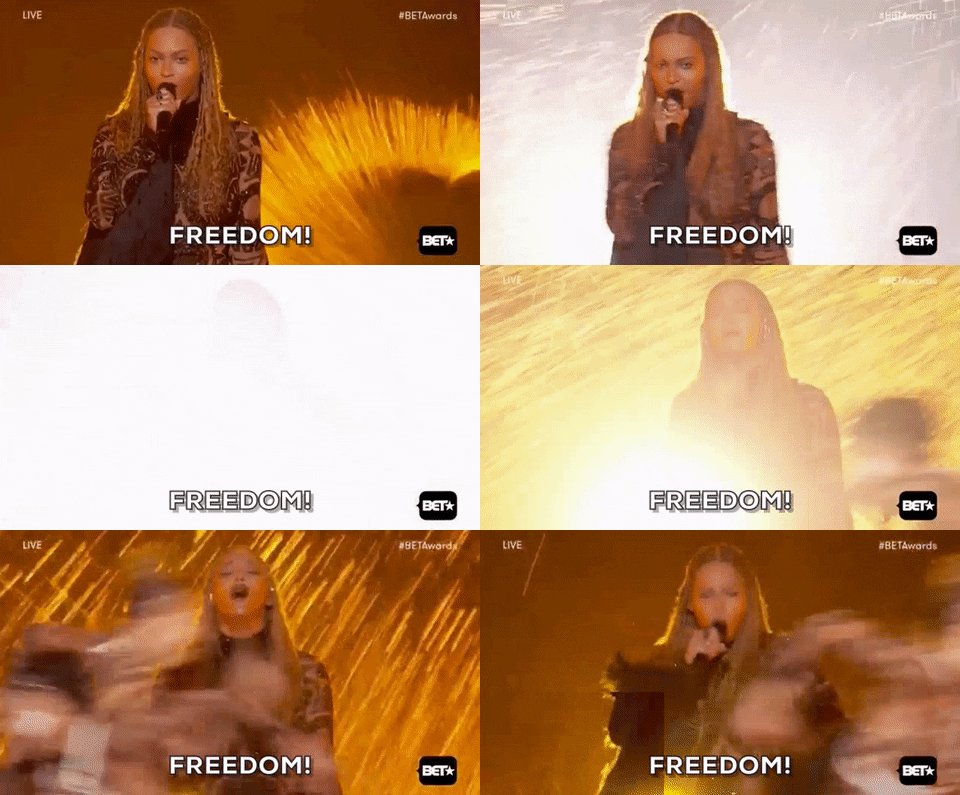
Beyoncé’s vocal performance on “Freedom” demonstrates her technical mastery while serving the song’s emotional and political content through dynamic range and expressive delivery. Her vocal approach varies throughout the song, beginning with more intimate, conversational delivery in the verses that creates a sense of personal confession and vulnerability. The chorus sections showcase her powerful belting technique, with sustained notes on the word “freedom” that create both emotional impact and musical drama. Her vocal tone incorporates elements of gospel and blues traditions, with melismatic passages that connect to African American vocal traditions while maintaining contemporary relevance. The song allows for vocal improvisation, particularly in the bridge sections where Beyoncé’s ad-libs and variations create spontaneous emotional moments. Her delivery of the word “freedom” varies throughout the song, sometimes desperate and pleading, other times triumphant and declarative, reflecting the complex emotions surrounding the quest for liberation. The vocal arrangement includes background vocals and harmonies that create a sense of collective voice and community, supporting the song’s themes of both individual and collective struggle. Beyoncé’s vocal performance incorporates elements of call and response, connecting to African American musical traditions while maintaining her distinctive artistic voice. The technical aspects of her performance, including breath control and dynamic range, serve the song’s emotional content rather than simply showcasing vocal ability.
Production techniques
The production of “Freedom” employs a sophisticated blend of contemporary and traditional recording techniques that create a sonic landscape supporting the song’s powerful message. The track incorporates field recording samples from Alan Lomax’s 1950s recordings, which are seamlessly integrated into the contemporary production to create historical continuity and authenticity. The mix balances acoustic and electronic elements, with live instruments recorded to capture their natural resonance while electronic elements provide modern sonic textures. Dynamic range is carefully managed throughout the song, with quiet, intimate moments contrasting with explosive, full-arrangement sections that mirror the emotional journey of the lyrics. The production incorporates spatial effects and reverb that create a sense of environment and atmosphere, particularly during the chorus sections where the mix expands to create a sense of collective celebration and resistance. Modern production techniques including compression and EQ are used to ensure clarity and impact while maintaining the organic feel of the performance.
Cultural and social context
Historical context
“Freedom” was released during a pivotal moment in contemporary American racial relations, as the Black Lives Matter movement gained national prominence following high-profile police killings of unarmed African Americans including Michael Brown, Eric Garner, and Sandra Bland. The song’s 2016 release coincided with ongoing protests and civil rights demonstrations across the United States, making its themes of liberation and resistance particularly relevant to contemporary audiences. The track’s incorporation of 1950s field recordings connects it to the Civil Rights Movement era, creating a bridge between historical and contemporary struggles for racial justice and equality. The song emerged during the final years of Barack Obama’s presidency, a period marked by both celebration of African American achievement and growing awareness of persistent systemic racism. The cultural moment surrounding the song’s release was characterized by increased media attention to police violence and racial injustice, with social media platforms amplifying voices of protest and resistance. The song’s themes resonated with ongoing conversations about mass incarceration, economic inequality, and voting rights that were prominent in American political discourse. The historical context includes the legacy of slavery and Jim Crow laws, which the song addresses through its imagery of chains and liberation. The song’s release during a period of increased racial tensions, including incidents in Ferguson, Baltimore, and other cities, gave its message particular urgency and relevance.
Artist’s personal context
Beyoncé’s journey to creating “Freedom” reflects her evolution from mainstream pop entertainer to cultural activist and social commentator, influenced by her experiences as a Black woman in America and her growing awareness of her platform’s potential for social impact. Her personal context includes her upbringing in Houston, Texas, where she was exposed to both Southern African American culture and the realities of racial inequality in the American South. The song represents a departure from her earlier, more commercially focused work, reflecting her increasing willingness to address controversial political topics and use her influence for social justice causes. Her marriage to Jay-Z and their shared experiences as successful African Americans in predominantly white industries informed her understanding of the complexities of achieving individual success while addressing systemic oppression. The creation of Lemonade, including “Freedom,” was influenced by her personal struggles with infidelity and betrayal, but the song transcends personal narrative to address broader themes of collective liberation and resistance. Her experiences as a mother, particularly following the birth of her daughter Blue Ivy, heightened her awareness of the world she was helping to create for the next generation. The song reflects her growing confidence in using her artistic platform to address political issues, despite potential commercial risks. Her personal context includes her connection to African American musical traditions through her family and community, which informed the song’s incorporation of gospel and blues elements.
Societal impact
“Freedom” had a significant impact on contemporary social justice movements, becoming an anthem for protests and demonstrations across the United States and internationally. The song’s adoption by Black Lives Matter activists and other social justice organizations demonstrated its power to mobilize and inspire collective action. The track’s influence extended beyond music, inspiring conversations about racial justice, police reform, and systemic inequality in mainstream media and academic contexts. The song’s visual component, featuring mothers of victims of police violence, amplified its cultural impact and brought additional attention to issues of police brutality and racial injustice. The song’s success helped establish Beyoncé as a cultural activist and political voice, influencing other artists to use their platforms for social justice causes. The track’s themes resonated with international audiences, contributing to global conversations about racial equality and human rights. The song’s impact was particularly notable in educational settings, where it was used to facilitate discussions about American history, civil rights, and contemporary social issues. The song’s influence on popular culture included its use in documentaries, television shows, and other media addressing themes of racial justice and empowerment. The track’s societal impact continues to be felt in ongoing social justice movements and discussions about racial equality in America and internationally.
Legacy and covers
The legacy of “Freedom” extends far beyond its initial release, with the song continuing to serve as an anthem for social justice movements and a touchstone for discussions about racial equality and empowerment. The track has been covered by numerous artists across different genres, each bringing their own interpretation to its powerful message while maintaining its essential themes of liberation and resistance. Notable covers include acoustic versions that emphasize the song’s spiritual and gospel roots, as well as arrangements that highlight its connection to traditional African American musical forms. The song’s influence on contemporary artists is evident in the increasing number of musicians who address social justice themes in their work, following Beyoncé’s example of using popular music as a vehicle for political expression. The track’s legacy includes its use in educational settings, where it serves as a teaching tool for discussions about American history, civil rights, and contemporary social issues. The song’s impact on the music industry includes its role in establishing commercial viability for explicitly political music, demonstrating that artists can address controversial topics while maintaining mainstream success. The track’s legacy is also evident in its continued relevance to contemporary social justice movements, with its themes and messages remaining applicable to ongoing struggles for racial equality and systemic reform. Academic scholars continue to analyze the song’s significance within the broader context of African American musical traditions and contemporary cultural expression.
Philosophical comparison
Western philosophy connections
“Freedom” resonates strongly with existentialist philosophy, particularly Jean-Paul Sartre’s concept that humans are “condemned to be free” and must create meaning through their choices and actions despite oppressive circumstances. The song’s emphasis on individual agency, expressed in lines like “I break chains all by myself,” reflects the existentialist belief in personal responsibility for one’s liberation and authentic existence. The track’s themes connect to John Stuart Mill’s conception of liberty, particularly his ideas about the tyranny of the majority and the importance of individual freedom in the face of social conformity and oppression. The song’s exploration of truth-seeking and authenticity aligns with philosophical traditions emphasizing the importance of genuine self-expression and resistance to false consciousness. The track’s spiritual elements and questions directed toward a divine father figure reflect existentialist concerns about the search for meaning in an apparently meaningless universe. The song’s emphasis on action and movement, with repeated references to running and marching, connects to pragmatist philosophy’s focus on the importance of practical action in creating social change. The track’s themes of transformation and rebirth resonate with Hegelian concepts of dialectical change and the process of becoming through struggle and conflict. The song’s exploration of the tension between individual and collective liberation reflects philosophical debates about the relationship between personal freedom and social responsibility that have been central to Western political philosophy.
Eastern philosophy connections
The song’s spiritual elements and emphasis on meditation and practice connect to Buddhist concepts of liberation from suffering through mindful action and self-awareness. The track’s references to running and movement can be understood through the lens of Taoist philosophy, particularly the concept of wu wei or effortless action that flows with natural forces rather than against them. The song’s themes of transformation and rebirth resonate with Hindu concepts of karma and dharma, suggesting that individual actions contribute to both personal and collective liberation. The track’s emphasis on truth-seeking and authenticity aligns with Buddhist ideas about the importance of right understanding and the elimination of illusion in achieving enlightenment. The song’s spiritual questioning and search for divine connection reflect Eastern philosophical traditions that emphasize the importance of direct spiritual experience and personal relationship with the divine. The track’s themes of resilience and persistence in the face of adversity connect to Confucian ideals of moral cultivation and the importance of character development through struggle. The song’s emphasis on collective liberation and social harmony resonates with Eastern philosophical traditions that prioritize community well-being and social balance. The track’s integration of personal and political liberation reflects Eastern philosophical concepts about the interconnectedness of individual and collective well-being.
Religious and spiritual themes
“Freedom” incorporates explicit Christian imagery and references, beginning with the opening confession “Lord forgive me” and continuing through questions directed toward a divine father figure. The song’s themes of liberation and redemption connect to biblical narratives of exodus and deliverance, particularly the story of Moses leading the Israelites out of slavery in Egypt. The track’s emphasis on spiritual practices, including meditation and prayer, reflects contemporary approaches to spirituality that combine traditional religious elements with personal spiritual development. The song’s references to chains and bondage evoke biblical imagery while also connecting to the historical experience of enslaved Africans and their descendants in America. The track’s themes of transformation and rebirth resonate with Christian concepts of conversion and spiritual renewal, suggesting that liberation involves both political and spiritual dimensions. The song’s incorporation of gospel musical elements connects it to African American religious traditions that have historically combined spiritual faith with social justice activism. The track’s emphasis on truth-seeking and authenticity reflects religious traditions that prioritize genuine spiritual experience over ritualistic observance. The song’s themes of collective liberation and social justice align with liberation theology’s emphasis on the connection between spiritual salvation and social transformation.
Psychological perspectives
From a psychological perspective, “Freedom” can be understood as an expression of trauma recovery and post-traumatic growth, with the narrator moving from a state of confusion and pain toward empowerment and self-determination. The song’s themes of breaking chains and refusing to let freedom “rot in hell” reflect psychological concepts of agency and self-efficacy that are crucial for overcoming oppression and trauma. The track’s emphasis on running and movement can be understood through the lens of embodied psychology, which recognizes the importance of physical action in processing trauma and achieving psychological healing.
Conclusion
Summary of findings
The analysis of Beyoncé’s “Freedom” reveals a multifaceted artistic work that successfully combines personal narrative with political activism, creating a powerful anthem for social justice and individual empowerment. The song’s lyrical content demonstrates sophisticated use of literary devices including metaphor, repetition, and symbolism to convey themes of liberation, resistance, and transformation. The musical composition effectively blends traditional African American musical forms with contemporary production techniques, creating a sonic landscape that supports the song’s powerful message. The track’s cultural and social context reflects its emergence during a pivotal moment in contemporary American racial relations, with its themes resonating strongly with ongoing social justice movements. The song’s incorporation of historical elements, including field recordings and traditional spiritual themes, creates important connections between past and present struggles for freedom and equality. The collaboration with Kendrick Lamar adds layers of complexity and contemporary relevance, providing specific examples of systemic oppression while maintaining the song’s overall themes of hope and resistance. The song’s impact extends beyond music, influencing social movements, educational discussions, and popular culture in ways that continue to resonate with contemporary audiences. The track’s technical and artistic elements work together to create a comprehensive artistic statement that addresses both individual and collective experiences of oppression and liberation. The song’s success demonstrates the power of popular music to influence social discourse and mobilize communities around important issues of justice and equality.
Personal interpretation
“Freedom” represents a masterful synthesis of personal and political expression that transcends traditional boundaries between entertainment and activism. The song’s power lies in its ability to make abstract concepts of liberation and justice tangible and emotionally resonant through specific imagery and musical elements. The track’s success in combining traditional African American musical forms with contemporary production techniques creates a bridge between historical and current struggles that feels both authentic and innovative. The song’s emphasis on individual agency while acknowledging systemic oppression reflects a sophisticated understanding of the complexity of liberation movements and the importance of both personal and collective action. The track’s spiritual elements add depth and universality to its message, connecting contemporary political struggles to broader themes of human dignity and transcendence. The song’s visual component and its adoption by social justice movements demonstrate its effectiveness as both artistic expression and practical tool for social change. The track’s enduring relevance and continued use in educational and activist contexts suggest its importance as a cultural document that captures a specific moment while addressing timeless themes. The song’s influence on other artists and its role in establishing commercial viability for explicitly political music represents a significant contribution to contemporary popular culture. The track’s success in maintaining artistic integrity while addressing controversial political topics provides a model for other artists seeking to use their platforms for social justice causes.
 be-song-be-you.com
Leave a comment