Wildflower: A comprehensive song analysis
Thesis statement
“WILDFLOWER” represents Billie Eilish’s most emotionally complex exploration of guilt, desire, and the tangled web of modern relationships, crafting a narrative that examines the psychological toll of romantic triangulation with unprecedented vulnerability. The song operates as both a confession and an interrogation, questioning the ethics of falling in love with someone while knowing their previous relationship intimately through the perspective of the wounded party. Eilish’s masterful storytelling reveals the intricate dynamics of contemporary dating culture, where social media connections and shared social circles create unprecedented emotional complexity and moral ambiguity. Through its haunting melody, sparse production, and deeply personal lyrics, “WILDFLOWER” transcends typical breakup songs to become a meditation on empathy, betrayal, and the ways in which we unknowingly hurt those we care about. The song’s genius lies in its refusal to provide easy answers or moral clarity, instead presenting a realistic portrait of how love can emerge from friendship, how comfort can transform into desire, and how the best intentions can lead to the deepest wounds.
Brief introduction to the song and artist
Released on May 17, 2024, as part of Billie Eilish’s third studio album “HIT ME HARD AND SOFT,” “WILDFLOWER” marks a significant evolution in the artist’s songwriting maturity and emotional depth. The track emerged during a period when Eilish was navigating her early twenties, grappling with the complexities of adult relationships while maintaining her position as one of America’s most influential young artists. Written and produced in collaboration with her brother FINNEAS, the song showcases Eilish’s continued commitment to intimate, confession-style songwriting that has defined her career since her breakthrough in 2016. The song arrives at a time when discussions about emotional intelligence, consent, and relationship ethics are increasingly prominent in American culture, particularly among Gen Z audiences who form Eilish’s core fanbase. Set against the backdrop of social media-driven celebrity culture, “WILDFLOWER” reflects the unique challenges faced by young people navigating relationships in an era of unprecedented connectivity and visibility. The song’s narrative complexity and emotional sophistication demonstrate Eilish’s growth as both an artist and a person, moving beyond the teenage angst of her earlier work to examine more nuanced emotional territories.
Context of the song’s creation and release
“WILDFLOWER” was created during the sessions for “HIT ME HARD AND SOFT,” an album that Eilish has described as her most personal and vulnerable work to date. The song emerged from Eilish’s real-life experiences navigating complex relationship dynamics, reflecting the increasing emotional sophistication that comes with entering one’s twenties. The creation process occurred during a period when Eilish was becoming more open about her personal life and relationships, marking a departure from the more guarded approach she had taken in previous years. The song was written and produced primarily by Eilish and FINNEAS in their home studio, maintaining the intimate, DIY aesthetic that has characterized their collaborative work throughout her career. The recording process coincided with broader cultural conversations about relationship ethics, emotional responsibility, and the impact of social media on modern romance, themes that permeate the song’s narrative structure. The decision to include “WILDFLOWER” as the fifth track on the album reflects its importance in the overall conceptual framework of “HIT ME HARD AND SOFT,” serving as a crucial emotional pivot point that explores themes of guilt and moral complexity that run throughout the record.
Overview of the song’s reception and impact
Upon its release, “WILDFLOWER” received widespread critical acclaim for its emotional maturity and sophisticated songwriting, with many reviewers praising Eilish’s ability to navigate complex moral terrain without resorting to simple judgments or easy resolutions. The song resonated particularly strongly with young adult audiences who recognized their own experiences in its portrayal of messy, complicated relationships and the guilt that can accompany falling in love under morally ambiguous circumstances. Critics noted the song’s departure from traditional pop song structures, praising its conversational tone and psychological depth as evidence of Eilish’s continuing artistic evolution. The track’s impact extended beyond music critics to cultural commentators who highlighted its honest examination of modern relationship dynamics and the ways in which social media and interconnected social circles complicate romantic entanglements. The song’s exploration of female friendship, romantic rivalry, and emotional responsibility sparked discussions about consent, communication, and ethics in contemporary dating culture. On streaming platforms, “WILDFLOWER” achieved significant success, with many listeners praising its relatability and emotional authenticity, while its vulnerable approach to complex themes established it as a standout track on an already acclaimed album.
Lyrical analysis
Breakdown of the song’s lyrics
The lyrics of “WILDFLOWER” unfold as a stream-of-consciousness confession, structured around the narrator’s internal struggle with guilt and desire following her romantic involvement with a friend’s ex-boyfriend. The opening verse establishes the foundation of the conflict with stark simplicity: “Things fall apart / And time breaks your heart,” immediately positioning the song within the universal experience of relationship dissolution. The narrative quickly becomes more specific as Eilish describes her role as comforter to the heartbroken girl, singing “She was cryin’ on my shoulder / All I could do was hold her,” establishing the intimate friendship that makes the subsequent romantic development so morally complex. The pre-chorus reveals the central tension as comfort transforms into romantic connection, with the line “Only made us closer until July” marking the temporal shift from friendship to something more complicated. The chorus serves as the song’s emotional center, with Eilish repeatedly questioning “Did I cross the line?” while describing her mental preoccupation with the other woman as “like a fever, like I’m burning alive.” The second verse introduces comparative elements, contrasting herself with the ex-girlfriend through descriptions of their different personalities and styles. The bridge intensifies the emotional stakes with vivid imagery of “Valentine’s Day, cryin’ in the hotel,” while the outro provides a devastating conclusion with the admission “I know you didn’t mean to hurt me, so I kept it to myself.”
Top five most used words in the lyrics
The most frequently appearing words in “WILDFLOWER” reveal the song’s thematic preoccupations and emotional focus. “I” appears most frequently, emphasizing the deeply personal, confessional nature of the narrative and the protagonist’s internal struggle with her own actions and feelings. “You” appears throughout as the song directly addresses the romantic partner, creating an intimate, conversational tone that makes listeners feel like witnesses to a private conversation. “She” appears regularly as the third person in this romantic triangle, representing the absent but omnipresent ex-girlfriend who haunts the narrator’s thoughts and relationship. “Me” and “my” appear frequently, reinforcing the self-focused, introspective nature of the lyrics and the narrator’s preoccupation with her own guilt and moral position. “Love” appears in various forms throughout the song, highlighting the central theme of romantic connection and its complications. “Know” and variations appear multiple times, emphasizing the theme of knowledge and awareness, particularly the painful awareness of having potentially caused harm. “Time” appears as both literal chronological marker and metaphorical concept, reflecting the song’s concern with timing, memory, and the persistence of guilt. The repetition of “all the time” in the chorus emphasizes the obsessive, inescapable nature of the narrator’s preoccupation with the situation.
Exploration of themes and motifs
“WILDFLOWER” explores several interconnected themes that create a complex emotional landscape. The primary theme of moral ambiguity runs throughout the song, examining the gray areas of romantic ethics where good intentions can lead to harmful outcomes. The theme of guilt and self-doubt permeates every verse, with the narrator constantly questioning her own actions and motivations while struggling with the weight of potential wrongdoing. The motif of haunting and obsession appears through references to seeing the ex-girlfriend “in the back of my mind all the time,” suggesting the psychological toll of moral uncertainty. The theme of female friendship and its complexities emerges through the initial portrayal of the narrator as confidant and supporter, highlighting how romantic desire can complicate and potentially destroy platonic relationships. The concept of timing serves as both theme and structural device, with specific temporal references like “July” and “Valentine’s Day” marking significant emotional moments. The theme of comparison and contrast appears through the narrator’s descriptions of herself versus the ex-girlfriend, exploring themes of self-worth and identity within romantic contexts. The motif of secrets and hidden knowledge runs through the song, culminating in the admission of keeping pain “to myself,” reflecting the isolation that comes with guilt and moral complexity.
Use of literary devices
Eilish employs numerous sophisticated literary devices to enhance the song’s emotional impact and narrative complexity. Metaphor appears prominently in the description of her obsession as “like a fever, like I’m burning alive,” transforming internal emotional states into visceral physical sensations that listeners can understand and relate to. The simile comparing her mental preoccupation to “a sign” suggests both divine intervention and ominous warning, creating ambiguity about whether the relationship is fated or forbidden. Repetition functions as both structural element and emotional intensifier, with phrases like “all the time” and “Did I cross the line?” becoming increasingly desperate with each iteration. The use of direct address throughout the song creates intimacy and immediacy, making listeners feel like witnesses to a private confession. Juxtaposition appears in the contrast between the narrator and the ex-girlfriend, described as “different from me / Happy and free in leather,” highlighting their opposing characteristics and lifestyles. Temporal imagery serves as both literal chronological marker and symbolic representation of memory and regret, with specific dates carrying emotional weight beyond their calendar significance. The rhetorical question “Did I cross the line?” functions as both literal inquiry and existential meditation, reflecting the narrator’s genuine uncertainty about moral boundaries and personal responsibility.
Emotional journey mapping
The emotional trajectory of “WILDFLOWER” follows a complex arc that mirrors the psychological experience of moral guilt and romantic confusion. The song begins with a sense of melancholy resignation as the narrator reflects on the universal nature of heartbreak and loss, establishing a contemplative, somewhat detached tone. This quickly shifts to a more personal register as she describes her role in comforting the heartbroken friend, introducing themes of empathy and care. The emotional temperature rises as the narrative moves from friendship to romantic involvement, with the repeated questioning “Did I cross the line?” revealing mounting anxiety and self-doubt. The middle sections intensify this emotional pressure through vivid descriptions of obsessive thoughts and physical sensations of guilt, reaching a peak of psychological distress in the bridge section. The final sections move toward a kind of resigned sadness, with the narrator acknowledging the pain of all parties involved while accepting the complexity of the situation without resolution. The overall emotional journey reflects the realistic experience of moral ambiguity, where feelings of guilt, desire, and confusion coexist without clear resolution or catharsis.
Musical composition
Technical analysis
“WILDFLOWER” is constructed in the key of F major, a choice that provides warmth and accessibility while supporting Eilish’s vocal range and the song’s intimate, conversational tone. The song follows a modified verse-chorus structure with an extended bridge section that serves as both emotional climax and narrative resolution. The harmonic progression is relatively simple but effective, built around the F major chord with strategic use of relative minor chords to create emotional tension and release. The rhythm section maintains a gentle, steady pulse in four-four time at approximately 95 beats per minute, creating a contemplative, almost hypnotic feel that supports the song’s introspective lyrics. The melodic structure of the vocal line is carefully crafted to feel conversational and natural, with Eilish’s characteristic approach of treating melody as an extension of speech patterns rather than traditional pop vocal conventions. The song’s arrangement features strategic use of space and silence, with instrumental elements entering and exiting to create dynamic movement without overwhelming the intimate scale of the composition. The overall harmonic language is accessible and familiar, allowing listeners to focus on the lyrical content and emotional delivery rather than complex musical structures. The song’s structure includes subtle variations in each repetition of the chorus, reflecting the evolving emotional state of the narrator throughout the song.
Instrumentation breakdown
The instrumentation of “WILDFLOWER” exemplifies the minimalist approach that has become characteristic of Eilish and FINNEAS’s collaborative work. The foundation is built on a simple piano part that provides both harmonic support and rhythmic pulse, played with a soft, intimate touch that complements the song’s confessional tone. Subtle electronic elements, likely created using software synthesizers and samples, add textural depth without overwhelming the acoustic foundation. The use of ambient sounds and atmospheric processing creates a sense of emotional space that mirrors the psychological landscape described in the lyrics. Bass elements are present but understated, providing harmonic grounding without competing for attention with the vocal line. Percussion is minimal and tasteful, consisting primarily of soft, organic-sounding elements that enhance the rhythm without creating a traditional pop drum pattern. String elements, likely synthesized or sampled, appear strategically to enhance emotional moments without becoming a dominant feature of the arrangement. The overall instrumental approach prioritizes clarity and emotional support for the vocal performance, with each element serving a specific function in creating the song’s intimate, bedroom-pop aesthetic. The production maintains the DIY, home-studio quality that has characterized much of Eilish’s work while demonstrating increased sophistication in arrangement and sonic texture.
Vocal analysis
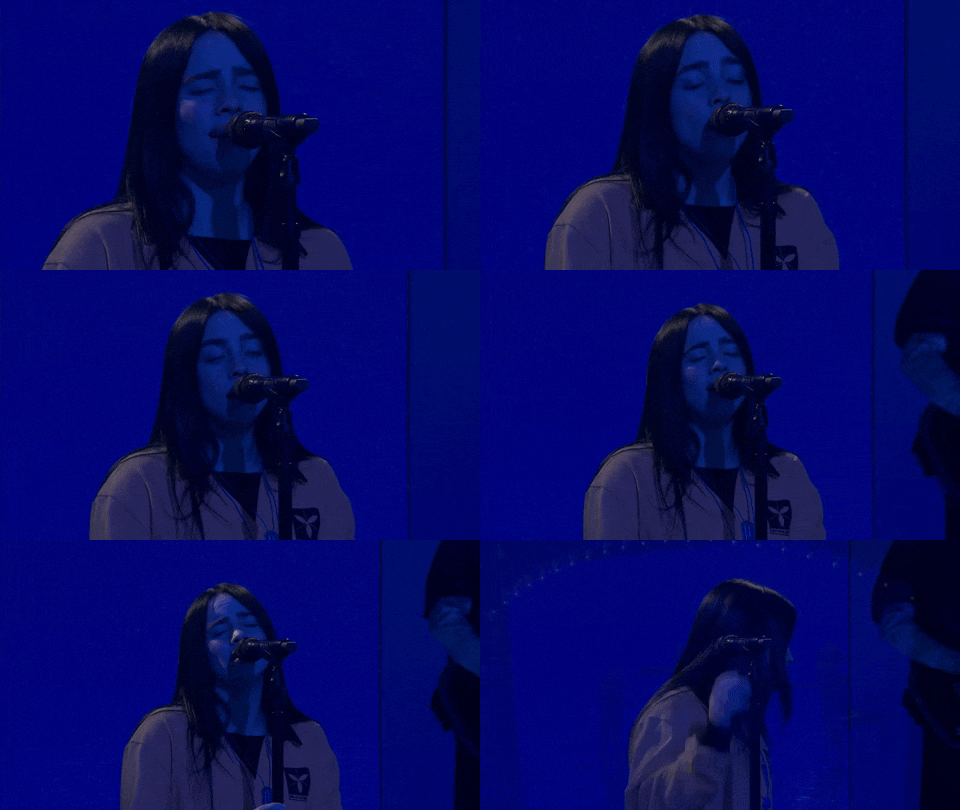
Billie Eilish’s vocal performance on “WILDFLOWER” represents some of her most nuanced and emotionally sophisticated work to date. Her delivery throughout the song maintains a conversational, almost whispered quality that creates intimacy and vulnerability while demonstrating remarkable technical control. The vocal timbre is characterized by a breathy, close-miked sound that makes listeners feel like they’re receiving a personal confession. Eilish’s use of vocal rhythm is particularly sophisticated, with natural speech patterns that work in counterpoint to the musical rhythm while maintaining perfect timing and clarity. Her vocal range remains relatively contained within her comfortable middle register, but she uses subtle variations in pitch and tone to convey complex emotional states. The dynamics of her vocal performance evolve throughout the song, beginning with quiet introspection and gradually building emotional intensity without ever becoming aggressive or overwrought. Her use of vocal harmonies, created through overdubbing, adds depth and complexity to key moments while maintaining the song’s overall intimate scale. The emotional expression in the vocal performance is remarkably controlled, conveying vulnerability and pain while avoiding melodrama or excessive sentimentality. Her characteristic vocal mannerisms, including slight vocal fry and strategic breath placement, enhance the authenticity and relatability of the performance.
Production techniques
The production of “WILDFLOWER,” handled by FINNEAS with Eilish’s input, employs a restrained, intimate approach that prioritizes emotional clarity over sonic complexity. The recording process utilized their home studio setup, maintaining the bedroom-pop aesthetic that has defined much of Eilish’s career while demonstrating increased sophistication in arrangement and mixing. The vocal recording employs close-miking techniques and subtle compression to achieve the intimate, whispered quality that characterizes Eilish’s delivery throughout the song. The use of reverb and delay effects is minimal but strategic, creating a sense of space without clouding the mix or reducing the feeling of intimacy. The overall mix maintains excellent clarity and separation between elements while preserving the organic, homemade quality that makes the song feel personal and authentic. Digital processing is used subtly to enhance rather than transform the natural qualities of the instruments and vocals. The mastering process maintains dynamic range and emotional nuance, avoiding the over-compression that characterizes much contemporary pop production. The production demonstrates a sophisticated understanding of how technical choices can support emotional content, with every decision serving the song’s themes of intimacy, vulnerability, and moral complexity.
Cultural and social context
Historical context
“WILDFLOWER” emerged in 2024 during a period of significant cultural evolution in American attitudes toward relationships, mental health, and emotional responsibility. The song arrived at a time when Generation Z was coming of age and establishing new norms around communication, consent, and relationship ethics that differed significantly from previous generations. The early 2020s had seen increased awareness of emotional intelligence and psychological well-being, influenced by social media discussions, mental health advocacy, and the isolating effects of the COVID-19 pandemic. The song’s release coincided with broader cultural conversations about toxic relationship patterns, the importance of emotional boundaries, and the complex ethics of modern dating culture. This period was characterized by increased openness about mental health struggles, the normalization of therapy and emotional self-reflection, and a growing awareness of how individual actions can have far-reaching emotional consequences. The song also emerged during a time of significant change in the music industry, with streaming platforms and social media creating new possibilities for intimate, personal music to reach global audiences. The cultural moment was marked by a rejection of traditional relationship scripts and an embrace of more nuanced, psychologically sophisticated approaches to romantic and platonic connections.
Artist’s personal context
At the time of “WILDFLOWER’s” creation, Billie Eilish was navigating her early twenties, a period of significant personal growth and increasing openness about her private life and relationships. Having grown up in the public eye since her teenage years, Eilish was experiencing the challenge of maintaining authenticity while managing unprecedented levels of fame and scrutiny. Her relationship with Jesse Rutherford of The Neighbourhood, which had been subject to public attention and some controversy due to their age difference, provided direct inspiration for the song’s exploration of complicated romantic dynamics. Eilish’s increasing comfort with discussing personal topics in her music reflected her growing maturity and confidence as both an artist and a person. Her experiences with social media, fan culture, and the interconnected nature of celebrity relationships in Los Angeles provided unique insight into how modern technology and social connectivity can complicate personal relationships. The song also reflected Eilish’s continued collaboration with her brother FINNEAS, a creative partnership that had evolved to accommodate her growing independence and artistic vision. Her advocacy for mental health awareness and emotional authenticity influenced the song’s vulnerable, confessional approach to difficult topics. The creation of “WILDFLOWER” occurred during a period when Eilish was consciously moving away from her earlier, more guarded public persona toward greater openness and emotional availability.
Societal impact
“WILDFLOWER” contributed to ongoing cultural conversations about relationship ethics, emotional responsibility, and the complexity of modern romance, particularly among young adult audiences who saw their own experiences reflected in its narrative. The song’s honest exploration of moral ambiguity and guilt resonated with listeners navigating similar situations in their own lives, contributing to broader discussions about communication, consent, and emotional care in romantic relationships. Its impact extended to conversations about female friendship and the ways in which romantic relationships can complicate platonic bonds, encouraging more nuanced discussions about loyalty, betrayal, and forgiveness. The song influenced social media discourse around relationship dynamics, with many users sharing their own experiences of similar moral dilemmas and emotional complexity. Its exploration of guilt and self-reflection contributed to the growing cultural emphasis on emotional intelligence and personal accountability in relationships. The song also impacted discussions about celebrity culture and privacy, as listeners connected its themes to Eilish’s own public relationships and the challenges of maintaining personal boundaries while living in the public eye. Its success reinforced the value of emotional authenticity and vulnerability in popular music, encouraging other artists to explore similarly complex emotional territories in their own work. The song’s influence extended beyond entertainment to therapeutic and educational contexts, where its themes were used to facilitate discussions about healthy relationship dynamics and emotional processing.
Legacy and covers
While “WILDFLOWER” is relatively recent, its influence on contemporary music and culture is already becoming apparent through various covers, interpretations, and responses from other artists. The song has been covered by numerous indie and alternative artists who have emphasized different aspects of its emotional complexity, from acoustic folk interpretations that highlight its confessional qualities to electronic remixes that emphasize its atmospheric production. Social media platforms have seen countless user-generated covers and interpretations, with many young musicians using the song as a vehicle for their own confessions and emotional explorations. The song’s influence can be heard in subsequent releases by other artists who have adopted similar approaches to moral ambiguity and emotional complexity in their own songwriting. Its impact on contemporary pop music production is evident in the increasing number of artists adopting similar minimalist, intimate production techniques and conversational vocal approaches. The song has been referenced and discussed in academic contexts, with music scholars and cultural critics examining its contribution to evolving attitudes about relationships and emotional responsibility. Its themes have influenced broader cultural discussions about consent, communication, and ethics in contemporary dating culture. The song’s exploration of female friendship and romantic rivalry has inspired various artistic responses and cultural commentary, establishing it as a touchstone for discussions about modern relationship dynamics.
Philosophical comparison
Western philosophy connections
“WILDFLOWER” resonates deeply with several major themes in Western philosophical tradition, particularly those related to moral responsibility, intentionality, and the complexity of human motivation. The song’s central question, “Did I cross the line?” connects directly to Kantian ethics and the concept of moral duty, exploring whether actions can be judged by their intentions or must be evaluated by their consequences. The narrator’s struggle with guilt despite potentially good intentions reflects the Kantian notion that moral worth derives from acting according to duty rather than inclination, even when those inclinations seem natural and caring. The song also embodies existentialist themes, particularly those explored by Simone de Beauvoir regarding the ethics of ambiguous situations where clear moral guidelines are absent or contradictory. The narrator’s situation reflects de Beauvoir’s concept of situated ethics, where moral decisions must be made within specific contexts that resist universal moral principles. The song’s exploration of the relationship between knowledge and responsibility connects to Aristotelian concepts of practical wisdom and the importance of understanding the full context of one’s actions. The theme of self-deception and rationalization that runs through the song reflects concerns raised by philosophers like Jean-Paul Sartre about bad faith and the ways in which individuals avoid taking full responsibility for their choices and their consequences.
Eastern philosophy connections
The themes explored in “WILDFLOWER” also connect meaningfully to several important concepts in Eastern philosophical traditions. The song’s portrayal of interconnected suffering reflects Buddhist concepts of dependent origination, where all actions and experiences are interconnected and individual suffering contributes to collective suffering. The narrator’s inability to escape her thoughts about the ex-girlfriend resonates with Buddhist teachings about the mind’s tendency to create suffering through attachment and obsessive thinking. The song’s emphasis on the persistence of guilt and mental preoccupation connects to Hindu and Buddhist concepts of karma, where actions create mental impressions that continue to influence consciousness long after the original events. The circular, obsessive quality of the narrator’s thoughts reflects Buddhist understanding of how the mind becomes trapped in repetitive patterns of desire, guilt, and rumination. The song’s exploration of the difference between intention and impact also connects to Taoist concepts about the unintended consequences of action and the importance of understanding the natural flow of events rather than forcing desired outcomes. The narrator’s struggle with moral uncertainty reflects Zen concepts about the limitations of conceptual thinking in navigating complex ethical situations, suggesting that some moral dilemmas cannot be resolved through rational analysis but must be lived through with acceptance and compassion.
Religious and spiritual themes
“WILDFLOWER” incorporates several spiritual and religious themes that add depth to its exploration of guilt, forgiveness, and moral complexity. The song’s central preoccupation with crossing moral lines connects to religious concepts of sin, transgression, and the human tendency to violate ethical boundaries despite good intentions. The narrator’s guilt and self-questioning reflect the Christian tradition of examination of conscience and the importance of recognizing one’s own capacity for causing harm. The theme of unintended consequences resonates with various religious teachings about the complexity of moral action and the ways in which even well-intentioned behavior can lead to suffering. The song’s exploration of secrets and hidden knowledge connects to spiritual traditions that emphasize the importance of honesty, transparency, and authentic communication in relationships. The narrator’s struggle with forgiveness, both self-forgiveness and the forgiveness of others, reflects religious teachings about mercy, redemption, and the possibility of healing after moral failure. The song’s emphasis on empathy and emotional care, even in the midst of moral complexity, connects to religious values of compassion and concern for others’ well-being. The temporal references and the persistence of memory reflect spiritual concepts about the lasting impact of actions and the importance of accepting responsibility for past choices while working toward healing and growth.
Psychological perspectives
From a psychological standpoint, “WILDFLOWER” offers a sophisticated exploration of guilt, moral injury, and the cognitive processes involved in ethical decision-making. The narrator’s mental state reflects clinical understanding of how guilt can become obsessive and intrusive, creating repetitive thought patterns that interfere with daily functioning and emotional well-being. The song also explores themes related to attachment theory, particularly how early experiences of providing comfort and support can evolve into romantic attachment, sometimes in ways that create ethical complications. The narrator’s preoccupation with the ex-girlfriend suggests elements of rumination and intrusive thoughts that are associated with anxiety disorders and depression. The song’s exploration of moral reasoning reflects psychological research about how individuals navigate ethical dilemmas, particularly situations where multiple valid moral principles come into conflict. The relationship between the narrator and her romantic partner demonstrates concepts from relationship psychology about how past relationships continue to influence current ones, creating triangulated dynamics that can be difficult to resolve. The song’s portrayal of guilt and self-doubt also connects to research about moral emotions and their role in social behavior, suggesting that guilt serves important functions in maintaining social bonds and encouraging ethical behavior, even when it becomes psychologically burdensome.
Conclusion
Summary of findings
This comprehensive analysis reveals “WILDFLOWER” to be a remarkably sophisticated exploration of contemporary relationship ethics that operates on multiple levels of meaning and cultural significance. The song’s narrative structure creates a compelling examination of moral ambiguity and emotional complexity, delivered through Eilish’s characteristically intimate and confessional approach to songwriting. The lyrical analysis demonstrates sophisticated use of literary devices and thematic development that transforms a personal story into a universal meditation on guilt, responsibility, and the unintended consequences of human connection. The musical composition showcases the continued evolution of Eilish and FINNEAS’s collaborative approach, maintaining their signature minimalist aesthetic while demonstrating increased sophistication in arrangement and emotional expression. The cultural and social context analysis reveals the song’s significant contribution to ongoing conversations about relationship ethics, emotional responsibility, and the challenges of navigating romance in an interconnected, socially mediated world. The philosophical connections illuminate the song’s engagement with fundamental questions about moral responsibility, intentionality, and the complexity of human motivation that have occupied thinkers across various traditions. The psychological perspectives highlight the song’s accurate and nuanced portrayal of the mental processes involved in moral reasoning and the emotional toll of ethical uncertainty.
Personal interpretation
“WILDFLOWER” represents Eilish’s most mature and emotionally sophisticated work to date, transforming what could have been a simple confession into a complex meditation on the nature of moral responsibility and emotional authenticity in contemporary relationships. The song’s power lies in its refusal to provide easy answers or moral clarity, instead presenting a realistic portrait of how good intentions can lead to complicated outcomes and how the heart’s desires can conflict with ethical principles. Eilish’s decision to explore these themes through her own experiences creates a work that is both deeply personal and universally relatable, speaking to anyone who has navigated the complex terrain of modern romance and friendship. The song’s exploration of female friendship and its potential fragility in the face of romantic desire adds layers of meaning that extend beyond typical love songs to examine broader questions about loyalty, competition, and support among women. The musical sophistication of the track, from its intimate production to Eilish’s nuanced vocal performance, elevates the material beyond simple pop entertainment to the level of artistic statement that will likely influence both contemporary artists and cultural conversations about relationships. The song’s enduring appeal stems from its emotional honesty and its willingness to sit with moral uncertainty rather than rushing toward resolution or forgiveness.
 be-song-be-you.com
Leave a comment