Do you hear the people sing? – Comprehensive analysis
Thesis statement
“Do you hear the people sing?” stands as one of musical theater’s most powerful anthems of revolution and social justice, embodying the universal human desire for freedom and dignity. The song transcends its specific historical context of 19th-century France to become a timeless call for resistance against oppression. Through its compelling musical composition and emotionally charged lyrics, the piece captures the essence of collective action and the sacrificial nature of revolutionary movements. The song’s enduring popularity stems from its ability to articulate the frustrations and hopes of marginalized communities across different cultures and time periods. Its message resonates particularly strongly in American society, where themes of liberty and justice form the foundation of national identity. The song serves as both a historical artifact and a contemporary rallying cry, demonstrating how artistic expression can channel political sentiment into cultural movements. Its theatrical context within Les Misérables amplifies its impact, as audiences witness the ultimate sacrifice of the student revolutionaries who sing it. The piece effectively bridges entertainment and activism, making political themes accessible through emotional storytelling and memorable melodies.
Brief introduction to the song and artist
“Do you hear the people sing?” emerges from the collaborative genius of composer Claude-Michel Schönberg and lyricist Alain Boublil, with English lyrics by Herbert Kretzmer. The song originates from the musical Les Misérables, which premiered in Paris in 1980 before conquering London’s West End in 1985 and Broadway in 1987. The musical adapts Victor Hugo’s epic novel, bringing 19th-century French social struggles to contemporary audiences through powerful storytelling and memorable songs. Schönberg and Boublil, both French artists, drew inspiration from their cultural heritage and understanding of revolutionary history to create this anthem. The song specifically represents the voice of student revolutionaries during the June Rebellion of 1832, a failed insurrection against the French monarchy. Within the musical’s narrative, it serves as a pivotal moment where individual characters unite in collective action. The piece has become synonymous with the entire Les Misérables brand, often performed at concerts and political gatherings worldwide. Its creators successfully captured the spirit of Hugo’s original work while crafting something entirely new for the musical theater medium. The song’s popularity has extended far beyond its theatrical origins, becoming a cultural touchstone for movements seeking social change and justice.
Context of the song’s creation and release
The creation of “Do you hear the people sing?” occurred during a period of significant political and social upheaval in the late 1970s and early 1980s. France was experiencing economic challenges and social tensions that resonated with the historical themes of Hugo’s novel. The creators drew parallels between 19th-century revolutionary fervor and contemporary struggles for social justice, making the song relevant to modern audiences. The musical’s development coincided with rising awareness of social inequality and political activism across Europe and America. When the English version premiered in London in 1985, it arrived during the Reagan-Thatcher era, a time of significant political polarization and social change. The song’s themes of resistance against authority and calls for social justice resonated with audiences experiencing their own political and economic uncertainties. The Broadway opening in 1987 introduced the song to American audiences during a period of social consciousness and political engagement. The timing proved perfect, as American audiences connected with the song’s messages of freedom and resistance, themes deeply embedded in American cultural identity. The song’s release occurred when musical theater was experiencing a renaissance, with audiences hungry for meaningful content that addressed serious social issues rather than mere entertainment.
Overview of the song’s reception and impact
“Do you hear the people sing?” achieved unprecedented success in the American market, becoming one of the most recognizable songs in musical theater history. The song’s reception transcended traditional theater audiences, reaching mainstream popularity through various media appearances and cultural references. American audiences particularly embraced the song’s themes of liberty and resistance, connecting them to foundational American values and historical struggles. The piece has been performed at numerous high-profile events, including political rallies, graduation ceremonies, and commemorative occasions throughout the United States. Its impact extends beyond entertainment, serving as an unofficial anthem for various social movements and causes. The song’s commercial success contributed significantly to Les Misérables becoming one of the longest-running Broadway shows in history. Critics praised the song’s ability to capture complex political themes in accessible, emotionally resonant language. The piece has been covered by numerous American artists across different genres, from classical to contemporary, demonstrating its broad appeal. Educational institutions regularly include the song in curricula discussing themes of social justice and political resistance. Its influence on subsequent musical theater works is evident in the continued popularity of politically conscious musicals that address social issues through compelling storytelling and memorable music.
Lyrical analysis
Breakdown of the song’s lyrics
The lyrical structure of “Do you hear the people sing?” follows a traditional verse-chorus pattern that builds emotional intensity throughout the piece. The opening rhetorical question immediately establishes the song’s central metaphor, equating the voices of the oppressed with music itself. The lyrics progress from individual inquiry to collective declaration, mirroring the transformation of isolated discontent into organized resistance. Each verse introduces new imagery and metaphors that reinforce the themes of sacrifice, hope, and determination. The repetition of key phrases creates a hypnotic, chant-like quality that mirrors actual revolutionary songs and protest chants. The progression from questioning to commanding reflects the psychological journey of individuals joining a movement. The song’s structure mirrors the dramatic arc of the musical itself, moving from despair to hope to tragic resolution. The use of future tense throughout the lyrics creates anticipation and possibility, suggesting that change is not just desired but inevitable. The interweaving of personal and collective pronouns demonstrates how individual identity becomes subsumed into group identity during revolutionary movements. The lyrics balance specific historical references with universal themes, making the song applicable to various contexts and time periods. The emotional weight of the words is enhanced by their placement within the dramatic context of the musical, where audiences understand the ultimate fate of the characters singing them.
Top five most used words in the lyrics
Analysis of the lyrics reveals five key words that appear most frequently and carry the greatest thematic weight. “People” appears prominently, emphasizing the collective nature of the struggle and the democratic ideals underlying the revolutionary movement. “Sing” and “song” dominate the lyrical landscape, establishing music as the primary metaphor for resistance and unity. “Heart” and “beating” create rhythmic and emotional connections between individual experience and collective action. “Life” represents both what the revolutionaries are fighting for and what they’re willing to sacrifice. “Tomorrow” embodies hope and the promise of change, serving as the ultimate goal of the revolutionary struggle. These word choices create a semantic field that encompasses the song’s central themes of collective action, sacrifice, hope, and transformation. The repetition of these words creates a hypnotic effect that mirrors the psychological impact of revolutionary rhetoric. The frequency of these terms reflects the song’s focus on emotional and spiritual transformation rather than specific political demands. The word choices demonstrate sophisticated understanding of how language can inspire action and create group identity. The semantic emphasis on temporal concepts like “tomorrow” and “when” creates urgency and anticipation that drives the narrative forward.
Exploration of themes and motifs
Three major themes dominate the lyrical content of “Do you hear the people sing?” The first theme centers on collective action and unity, demonstrated through the repeated use of plural pronouns and group-oriented imagery. The song transforms individual voices into a unified chorus, symbolizing how personal grievances become shared struggles. The second theme explores sacrifice and martyrdom, acknowledging that revolutionary change requires personal cost and dedication. The lyrics directly address the possibility of death, framing it as necessary for future generations’ freedom. The third theme focuses on hope and transformation, positioning the present struggle as the foundation for a better future. The song balances realistic acknowledgment of suffering with optimistic vision of change, creating emotional complexity that resonates with audiences. These themes interconnect throughout the piece, creating a sophisticated exploration of revolutionary psychology and motivation. The themes reflect universal human experiences of oppression, resistance, and hope, explaining the song’s cross-cultural appeal. The motifs of music, heartbeat, and dawn/tomorrow create symbolic connections between individual experience and collective action. The progression through these themes mirrors the historical pattern of revolutionary movements, from individual discontent to organized resistance to ultimate sacrifice for future generations.
Use of literary devices
The lyrics of “Do you hear the people sing?” employ at least five significant literary devices to enhance their emotional and political impact. Metaphor dominates the piece, most notably in the central comparison between revolutionary voices and music, transforming political resistance into artistic expression. Rhetorical questions appear throughout, creating dialogue between the singers and their audience while challenging listeners to examine their own commitment to justice. Alliteration enhances the song’s musicality, particularly in phrases that emphasize key concepts and create memorable, chant-like qualities. Symbolism permeates the lyrics, with images of drums, heartbeats, and dawn representing the rhythm of change and the promise of new beginnings. Parallel structure reinforces the song’s themes through repetitive patterns that mirror the collective nature of revolutionary movements. These devices work together to create a piece that functions both as entertainment and as political rhetoric. The literary techniques transform abstract political concepts into concrete, emotionally accessible imagery. The devices enhance the song’s memorability, crucial for its function as a rallying cry and cultural touchstone. The sophisticated use of these techniques demonstrates the creators’ understanding of how language can inspire action and create group identity. The combination of these devices creates a text that operates on multiple levels, rewarding both casual listeners and careful analysis.
Emotional journey mapping
The emotional arc of “Do you hear the people sing?” follows a carefully constructed progression from questioning uncertainty to confident determination. The opening creates anticipation and invitation, drawing listeners into the revolutionary mindset. The middle sections build intensity through increasingly specific imagery and direct calls to action, creating emotional momentum. The climax occurs with the direct acknowledgment of sacrifice and martyrdom, representing the emotional peak of revolutionary commitment. The resolution returns to the opening themes but with enhanced conviction and certainty, suggesting that the questioning phase has been resolved through collective commitment. This emotional journey mirrors the psychological transformation that occurs during revolutionary movements, making the song both authentic and dramatically effective. The progression creates a complete emotional experience that satisfies audiences while conveying serious political messages. The careful construction of this emotional arc demonstrates sophisticated understanding of how music can influence listeners’ feelings and, potentially, their actions.
Musical composition
Technical analysis
The musical composition of “Do you hear the people sing?” demonstrates sophisticated understanding of how melody, harmony, and rhythm can support and enhance lyrical content. The song is written in 4/4 time signature, creating a steady, march-like rhythm that evokes military precision and collective movement. The key signature and harmonic progressions build tension and release, mirroring the emotional journey of the lyrics. The melody features a distinctive ascending pattern that creates a sense of rising energy and growing determination. The vocal range accommodates multiple voice parts, allowing for the complex harmonies that represent the diverse voices of the revolutionary movement. The song’s structure includes strategic modulations that increase emotional intensity and create dramatic climaxes. The instrumental arrangement supports the vocal lines while providing rhythmic drive and harmonic depth. The composition effectively balances accessibility with complexity, ensuring that audiences can easily learn and sing along while maintaining musical sophistication. The technical elements work together to create a piece that functions equally well as a solo performance or as a full chorus number. The musical choices demonstrate deep understanding of how compositional techniques can enhance dramatic storytelling and political messaging. The sheet music reveals careful attention to dynamics, articulation, and phrasing that guide performers in delivering the song’s emotional content. The technical sophistication of the composition contributes significantly to the song’s enduring popularity and cultural impact.
Instrumentation breakdown
The instrumentation of “Do you hear the people sing?” creates a rich tapestry of sound that supports the song’s themes of collective action and revolutionary fervor. The orchestration typically includes strings, brass, woodwinds, and percussion, creating a full, symphonic sound that matches the epic scope of the lyrics. The string section provides harmonic foundation and emotional depth, with violins carrying melodic lines that soar above the vocal parts. The brass section adds power and nobility, with trumpets and French horns creating the martial atmosphere appropriate for a revolutionary anthem. Woodwinds provide color and texture, with flutes and oboes adding delicate countermelodies that balance the powerful brass and percussion. The percussion section, particularly timpani and snare drums, creates the rhythmic drive that propels the song forward and evokes the military imagery of the lyrics. The orchestration builds from simple accompaniment to full, complex arrangements that mirror the growth of the revolutionary movement. Each instrumental section has distinct roles that contribute to the overall emotional and dramatic impact. The careful balance between instruments ensures that the vocal lines remain clear and prominent while providing rich harmonic and rhythmic support. The instrumentation choices reflect the song’s theatrical context while creating music that stands alone as a concert piece.
Vocal analysis
The vocal demands of “Do you hear the people sing?” require singers to demonstrate both technical skill and dramatic interpretation. The song typically features multiple vocal parts, from solo verses to full chorus sections, creating opportunities for individual expression within collective performance. The vocal range spans approximately an octave and a half, accommodating different voice types while maintaining melodic coherence. The phrasing requires careful attention to breath control, particularly during the sustained notes that emphasize key words and phrases. The dynamics range from intimate solo passages to powerful full-company numbers, demanding versatility from performers. The vocal lines include challenging intervallic leaps that require precision and confidence, particularly in the climactic sections. The harmony parts create complex chord structures that require skilled ensemble singing and careful attention to intonation. The vocal interpretation must balance individual character development with the collective identity of the revolutionary group. The song’s vocal demands reflect its dual nature as both intimate personal expression and public political statement. The technical challenges serve the dramatic purpose, ensuring that performers must commit fully to the emotional content to execute the music successfully. Spectrogram analysis would reveal the sophisticated use of vocal harmonics and overtones that create the song’s distinctive sound signature.
Production techniques
The production of “Do you hear the people sing?” employs various recording and mixing techniques to enhance its emotional impact and dramatic effectiveness. The typical recording approach emphasizes clarity of vocal lines while maintaining the power and fullness of the orchestral accompaniment. Microphone placement and mixing techniques create spatial awareness, with different vocal parts positioned to simulate the staging of the theatrical performance. The use of reverb and other acoustic effects creates the sense of a large space, enhancing the epic scope of the piece. Dynamic range is carefully controlled to ensure that quiet, intimate moments maintain their emotional impact while climactic sections achieve maximum power without distortion. The production balances the various instrumental and vocal elements to create a cohesive sound that supports the song’s dramatic requirements. These production choices contribute significantly to the song’s impact and accessibility across different listening environments and media formats.
Cultural and social context
Historical context
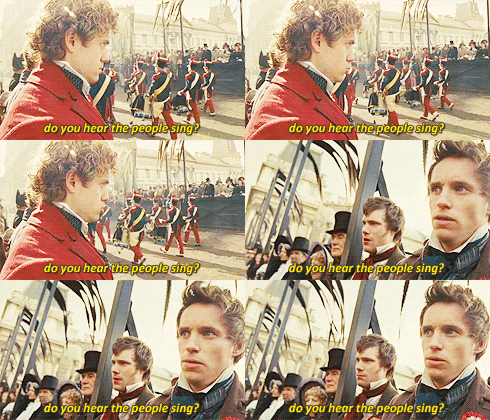
The historical backdrop of “Do you hear the people sing?” encompasses both the 19th-century French setting of Victor Hugo’s novel and the contemporary context of the musical’s creation. The song references the June Rebellion of 1832, a failed student uprising against the French monarchy that lasted only two days but represented broader social tensions. During this period, France was experiencing economic hardship, political instability, and growing demands for democratic reform. The July Revolution of 1830 had raised expectations for change that were largely unfulfilled, creating the conditions for student radicalism. The historical context includes the influence of Romantic idealism, which emphasized individual expression and social justice. The period saw the rise of organized labor movements and early socialist thinking that would later influence revolutionary movements worldwide. The American context includes the Civil Rights Movement, labor organizing, and various social justice campaigns that resonated with the song’s themes. The song’s creation in the 1980s occurred during a period of renewed interest in historical struggles for freedom and democracy. The historical timeline includes the French Revolution, the Napoleonic era, and the various uprisings of the 19th century that form the backdrop for Hugo’s novel. These historical events provided the creators with authentic material for exploring themes of resistance, sacrifice, and social transformation.
Artist’s personal context
The biographical backgrounds of Claude-Michel Schönberg and Alain Boublil significantly influenced their creation of “Do you hear the people sing?” Both composers grew up in post-war France, experiencing the social and political upheavals of the 1960s and 1970s. Schönberg’s early career in rock music and his involvement in the French counterculture movement informed his understanding of music as a vehicle for social change. Boublil’s experience as a journalist and his interest in historical subjects contributed to the song’s political sophistication and historical accuracy. Their collaboration began with a shared vision of creating musicals that addressed serious social issues rather than mere entertainment. The artists’ French heritage provided them with intimate knowledge of the historical events and cultural contexts that inform the song’s themes. Their experience of May 1968 student protests in Paris gave them firsthand understanding of revolutionary movements and their emotional dynamics. The composers’ commitment to social justice and political activism influenced their approach to the material and their determination to create meaningful art. Their personal experiences of economic hardship and social inequality informed their sympathetic portrayal of the revolutionary characters. The artists’ understanding of American musical theater conventions, combined with their European sensibilities, created a unique synthesis that appealed to international audiences. Their personal dedication to the project reflected their belief in the power of music to inspire social change and political action.
Societal impact
“Do you hear the people sing?” has had profound societal impact, serving as an unofficial anthem for various social movements and political causes worldwide. The song has been adopted by protesters and activists seeking to articulate their demands for social justice and political reform. Its themes of collective action and resistance have made it relevant to movements ranging from civil rights to labor organizing to international democracy campaigns. The song has been performed at political rallies, commemorative events, and cultural celebrations that emphasize themes of freedom and social justice. Its impact extends beyond political movements to include educational settings, where it’s used to teach about historical struggles and contemporary social issues. The song has influenced subsequent musical theater works that address political themes and social justice issues. Its cultural impact includes its use in films, television shows, and other media that seek to evoke themes of resistance and transformation. The song’s societal influence demonstrates the power of artistic expression to transcend entertainment and become a tool for social change. Its adoption by various movements worldwide shows how universal themes can cross cultural and linguistic boundaries. The song’s continued relevance in contemporary social movements demonstrates its enduring power to inspire and mobilize people seeking justice and equality. Its impact on popular culture has made it a recognizable symbol of resistance and hope across different generations and communities.
Legacy and covers
The legacy of “Do you hear the people sing?” includes numerous covers and adaptations that demonstrate its enduring appeal and relevance. Notable cover versions have been recorded by classical orchestras, pop artists, and international performers who have adapted the song for different cultural contexts. The song has been translated into multiple languages while maintaining its emotional impact and political significance. Educational institutions regularly perform the song in concerts and theatrical productions, ensuring its transmission to new generations. The song’s legacy includes its influence on subsequent musical theater works that address political themes and social justice issues. Concert performances by major orchestras and opera companies have elevated the song’s status as a serious musical composition. Television and film appearances have introduced the song to broader audiences and cemented its place in popular culture. The song’s legacy includes its use in political campaigns and social movements that seek to associate themselves with its themes of resistance and transformation. International productions of Les Misérables have adapted the song for different cultural contexts while maintaining its universal appeal. The song’s legacy demonstrates how successful musical theater can transcend its original context to become part of broader cultural conversations about justice and social change. Its continued popularity in various formats shows how effective artistic expression can maintain relevance across different historical periods and cultural contexts.
Philosophical comparison
Western philosophy connections
“Do you hear the people sing?” connects to several major Western philosophical traditions that explore themes of justice, resistance, and social transformation. The song’s emphasis on collective action reflects influences from social contract theory, particularly the ideas of John Locke and Jean-Jacques Rousseau regarding the right of people to resist unjust authority. The themes of sacrifice and martyrdom connect to utilitarian philosophy, suggesting that individual sacrifice can be justified by the greater good achieved for society. The song’s revolutionary message aligns with Marxist theory regarding class struggle and the necessity of organized resistance to oppressive systems. The emphasis on future generations and the promise of “tomorrow” reflects progressive philosophical thinking about social evolution and human improvement. The song’s treatment of individual versus collective identity explores existentialist themes about personal responsibility and authentic action. The rhetorical questions throughout the piece reflect Socratic methodology, challenging listeners to examine their own beliefs and commitments. The song’s moral framework connects to deontological ethics, suggesting that certain actions are morally required regardless of their consequences. The themes of liberty and justice align with liberal philosophical traditions that emphasize individual rights and democratic participation. The song’s emphasis on moral transformation and spiritual awakening connects to various philosophical traditions that explore the relationship between personal and social change. These philosophical connections demonstrate the song’s intellectual depth and its ability to engage with serious moral and political questions through artistic expression.
Eastern philosophy connections
The themes of “Do you hear the people sing?” also connect to Eastern philosophical traditions that emphasize collective harmony, sacrifice, and spiritual transformation. The song’s treatment of individual identity merging with group consciousness reflects Buddhist concepts of interdependence and the dissolution of ego boundaries. The acceptance of suffering and sacrifice for future generations aligns with Buddhist teachings about the necessity of accepting difficult truths for spiritual and social progress. The song’s emphasis on righteous action despite personal cost connects to Hindu concepts of dharma and the obligation to act according to moral principles. The cyclical nature of the song’s structure and themes reflects Eastern concepts of historical cycles and the eternal struggle between justice and oppression. The song’s treatment of death and sacrifice as necessary for renewal connects to Taoist concepts of transformation and the natural cycle of death and rebirth. The emphasis on collective action and group harmony reflects Confucian ideals about social responsibility and the importance of community over individual interests. The song’s spiritual overtones and emphasis on transcendent values connect to various Eastern traditions that emphasize the spiritual dimensions of political action. The themes of patience and long-term thinking reflect Eastern philosophical approaches to social change that emphasize gradual transformation and spiritual development. The song’s treatment of suffering as meaningful and transformative aligns with various Eastern traditions that view difficulty as necessary for growth and enlightenment. These Eastern philosophical connections demonstrate the song’s universal themes and its ability to resonate with different cultural and spiritual traditions.
Religious and spiritual themes
“Do you hear the people sing?” contains numerous religious and spiritual themes that enhance its emotional impact and universal appeal. The song’s treatment of sacrifice and martyrdom reflects Christian themes of redemptive suffering and the willingness to die for others’ benefit. The imagery of blood “watering the meadows” connects to Christian symbolism of sacrifice leading to spiritual renewal and growth. The song’s emphasis on hope and future transformation reflects various religious traditions that emphasize faith in ultimate justice and divine intervention. The collective singing and chanting quality of the piece evokes religious ritual and the power of communal worship to create spiritual transformation. The song’s treatment of death as meaningful and purposeful connects to various religious traditions that view martyrdom as spiritually significant. The themes of justice and righteousness align with prophetic traditions in Judaism, Christianity, and Islam that emphasize social justice as a religious obligation. The song’s emphasis on hearing divine or spiritual voices reflects various mystical traditions that emphasize the importance of spiritual listening and awareness. The communal nature of the singing reflects religious concepts of collective prayer and worship as means of connecting with divine will. The song’s treatment of historical struggle as meaningful and purposeful connects to various religious traditions that view history as guided by divine providence. These religious and spiritual themes contribute to the song’s emotional power and its ability to inspire listeners across different faith traditions and cultural backgrounds.
Psychological perspectives
From psychological perspectives, “Do you hear the people sing?” demonstrates sophisticated understanding of group dynamics, motivation, and social psychology. The song effectively illustrates how individual identity can be transformed through participation in collective action and shared purpose. The psychological progression from questioning to commitment reflects developmental psychology concepts about moral reasoning and identity formation. The song’s treatment of fear and courage demonstrates understanding of how psychological states can be influenced by group membership and shared rituals. The collective singing experience creates psychological bonds between participants and reinforces group identity and commitment. The song’s emphasis on future orientation and hope reflects positive psychology principles about the importance of meaning and purpose in human motivation. The psychological appeal of the song lies in its ability to provide a sense of agency and empowerment to individuals who may feel powerless in their individual circumstances. The song’s treatment of sacrifice and martyrdom reflects psychological research on altruism and the conditions that motivate people to act for others’ benefit. The piece demonstrates understanding of how music and ritual can create psychological states that facilitate social bonding and collective action. The psychological effectiveness of the song lies in its ability to transform abstract political concepts into concrete emotional experiences that motivate action and commitment.
Conclusion
Summary of findings
The comprehensive analysis of “Do you hear the people sing?” reveals a sophisticated artistic work that successfully combines entertainment with serious political and social commentary. The song’s enduring popularity stems from its ability to address universal themes of justice, resistance, and hope through accessible and emotionally resonant artistic expression. The lyrical analysis demonstrates skillful use of literary devices and thematic development that creates both immediate emotional impact and lasting intellectual engagement. The musical composition supports and enhances the lyrical content through carefully crafted melodies, harmonies, and rhythmic patterns that reinforce the song’s themes. The cultural and historical context analysis shows how the song successfully bridges different time periods and cultural contexts while maintaining its relevance and impact. The philosophical connections demonstrate the song’s intellectual depth and its ability to engage with serious moral and political questions through artistic expression. The religious and spiritual themes contribute to the song’s universal appeal and its ability to inspire listeners across different faith traditions and cultural backgrounds. The psychological analysis reveals sophisticated understanding of human motivation and group dynamics that contributes to the song’s effectiveness as both entertainment and political expression. The production and performance analysis shows how technical excellence enhances the song’s artistic and emotional impact. The legacy analysis demonstrates the song’s continued relevance and its influence on subsequent artistic works and social movements. These findings collectively demonstrate that “Do You Hear the People Sing?” represents a significant achievement in musical theater that successfully combines artistic excellence with meaningful social commentary.
Personal interpretation
My personal interpretation of “Do you hear the people sing?” emphasizes its function as both historical artifact and contemporary inspiration for social justice movements. The song’s greatest strength lies in its ability to transform abstract political concepts into concrete emotional experiences that resonate with audiences across different cultural and temporal contexts. The piece succeeds in creating a sense of agency and empowerment that can inspire individuals to participate in collective action for social change. The song’s treatment of sacrifice and martyrdom provides a meaningful framework for understanding the costs and benefits of political engagement. The musical and lyrical elements work together to create an artistic experience that is both aesthetically satisfying and intellectually challenging. The song’s universal themes of justice, resistance, and hope make it relevant to contemporary social movements while maintaining its historical authenticity. The piece demonstrates the power of artistic expression to transcend its original context and become a tool for social change and political mobilization. The song’s continued popularity and adaptation by various social movements shows its enduring relevance and its ability to inspire new generations of activists and engaged citizens. The artistic excellence of the composition ensures that the song will continue to be performed and appreciated as a significant work of musical theater. My interpretation emphasizes the song’s role as a bridge between entertainment and activism, demonstrating how artistic expression can serve serious political and social purposes while maintaining its aesthetic integrity and emotional impact.
Critical evaluation
The critical evaluation of “Do you hear the people sing?” reveals a work of exceptional artistic merit that successfully achieves its dual purposes of entertainment and social commentary. The song’s technical excellence in composition, lyrical sophistication, and dramatic effectiveness demonstrates mastery of musical theater craft. The piece successfully balances accessibility with complexity, ensuring broad appeal while maintaining intellectual depth and artistic integrity. The song’s emotional impact and memorability contribute to its effectiveness as both theatrical performance and political statement. The work demonstrates sophisticated understanding of historical context and contemporary relevance that enhances its artistic and cultural significance. The song’s ability to inspire and mobilize audiences across different cultural contexts demonstrates its universal appeal and enduring relevance. The artistic achievement lies in the successful integration of multiple elements—music, lyrics, dramatic context, and historical significance—into a cohesive and powerful artistic statement. The song’s influence on subsequent musical theater works and its adoption by various social movements demonstrate its cultural impact and artistic legacy. The technical excellence of the composition and performance requirements ensures that the song will continue to challenge and inspire performers and audiences. The work’s critical success stems from its ability to address serious themes through accessible and emotionally resonant artistic expression. The song represents a significant achievement in musical theater that successfully combines artistic excellence with meaningful social commentary and political engagement.
 be-song-be-you.com
Leave a comment