No diggity by Blackstreet: Complete song analysis
Thesis statement
“No diggity” by Blackstreet represents a pivotal moment in 1990s R&B and hip-hop fusion, demonstrating how the genre successfully incorporated rap elements while maintaining its melodic sophistication. The song’s central argument revolves around the celebration of female empowerment and street-smart independence, wrapped in a production that bridges traditional soul music with contemporary urban sounds. Through its innovative use of sampling, particularly Bill Withers’ “Grandma’s Hands,” the track creates a nostalgic yet forward-looking sonic landscape that speaks to both past and present musical traditions. The collaboration between Blackstreet, Dr. Dre, and Queen Pen showcases the power of cross-genre partnerships in creating commercially successful yet artistically credible music. The song’s lyrical content, while superficially about romantic attraction, actually presents a complex portrait of agency, respect, and mutual recognition between partners. Its production techniques, incorporating elements of New Jack Swing with West Coast hip-hop influences, created a template that would influence R&B production for years to come. The track’s success demonstrates how authentic collaboration between established and emerging artists can create music that transcends traditional genre boundaries while maintaining commercial appeal and cultural relevance.
Brief introduction to the song and artist
Blackstreet emerged from the musical vision of Teddy Riley, a producer and performer who had already established himself as a pioneer of the New Jack Swing movement through his work with Guy and other acts. The group represented Riley’s attempt to create a more mature, sophisticated sound that could compete with the emerging hip-hop scene while maintaining R&B’s melodic sensibilities. Formed in the early 1990s, Blackstreet initially consisted of Riley, Chauncey Hannibal, Levi Little, and Joe Stonestreet, though the lineup would evolve over time. The group’s name itself suggested their connection to urban street culture while maintaining the musical sophistication that characterized Riley’s production style. Their debut album established them as serious contenders in the R&B landscape, but it was “No diggity” that truly catapulted them to mainstream success. The song represented a perfect storm of musical elements: Riley’s innovative production, strong vocal performances, and strategic collaborations with hip-hop artists. In the context of American music in the mid-1990s, Blackstreet occupied a unique position, bridging the gap between traditional R&B groups and the emerging hip-hop influenced acts that were beginning to dominate the charts. Their success reflected broader changes in American popular music, where genre boundaries were becoming increasingly fluid and collaboration between different musical communities was becoming more common.
Context of the song’s creation and release
“No diggity” was created during a period of significant transformation in American popular music, released in 1996 when the music industry was experiencing a major shift toward hip-hop and rap influences in mainstream R&B. The song emerged from the cultural landscape of the mid-1990s, a time when the hip-hop community was asserting its creative and commercial dominance while R&B artists were seeking ways to remain relevant in this changing environment. The collaboration with Dr. Dre was particularly significant, as it represented a bridge between East Coast and West Coast hip-hop scenes during a period of intense rivalry and tension. Riley’s decision to work with both Dre and Queen Pen demonstrated his commitment to creating music that would appeal to diverse audiences while maintaining artistic integrity. The song’s creation coincided with the rise of music videos as a dominant promotional tool, and MTV’s influence on popular culture was at its peak. The recording process took place during a period when sampling was becoming increasingly sophisticated, allowing producers to create complex musical tapestries that referenced multiple musical traditions simultaneously. The song’s release strategy reflected the changing nature of the music industry, where cross-promotional opportunities and strategic partnerships were becoming essential for commercial success. The timing of the release also coincided with a period of economic prosperity in America, which created a receptive audience for music that celebrated success and material achievement.
Overview of the song’s reception and impact
“No diggity” achieved remarkable commercial success in the United States, reaching number one on the Billboard Hot 100 and establishing Blackstreet as a major force in contemporary R&B. The song’s success was particularly notable because it managed to appeal to both R&B and hip-hop audiences simultaneously, demonstrating the increasing fluidity of genre boundaries in American popular music. Radio programmers embraced the track across multiple formats, from urban contemporary to mainstream pop, reflecting its broad appeal and crossover potential. The song’s impact extended beyond commercial success, influencing the production techniques and collaborative approaches of numerous artists who followed. Its success helped establish the template for future R&B-hip-hop collaborations, showing how artists from different musical backgrounds could work together to create music that respected both traditions while creating something entirely new. The song’s reception was also notable for its positive critical response, with music journalists praising its sophisticated production and authentic collaborative spirit. The track’s success helped solidify Teddy Riley’s reputation as one of the most innovative producers in contemporary music, while also establishing Queen Pen as a significant voice in hip-hop. The song’s impact on popular culture extended beyond music, influencing fashion, dance, and urban culture more broadly. Its success demonstrated the commercial viability of music that celebrated urban culture and street-smart independence, helping to pave the way for the mainstream acceptance of hip-hop culture that would accelerate in the following decade.
Lyrical analysis
Breakdown of the song’s lyrics
The lyrical structure of “No diggity” operates on multiple levels, beginning with Dr. Dre’s opening verse that establishes the song’s confident, celebratory tone through references to collaboration and creative partnership. The phrase “collab’ creations, bump like acne” immediately signals the song’s focus on artistic collaboration while using street vernacular to maintain authenticity. Dre’s verse progresses through themes of attraction and magnetic appeal, with lines like “Attracting honeys like a magnet” establishing the central metaphor of irresistible attraction. The transition to the chorus introduces the song’s central hook, “I like the way you work it, no diggity,” which functions both as a declaration of admiration and a statement of authenticity. The repetition of “no diggity” serves as both a catchphrase and a philosophical statement about genuine appreciation versus superficial attraction. The second verse deepens the character portrait, describing a woman who is “strictly biz” and “don’t play around,” emphasizing her professional competence and personal agency. The lyrics consistently avoid objectification, instead presenting a portrait of mutual respect and recognition. Queen Pen’s verse adds another layer of complexity, shifting the perspective to present the female voice as equally confident and discerning. Her lines about being “as real as can be” and maintaining authenticity echo the song’s broader themes about genuine connection and mutual respect. The collaborative nature of the lyrics reflects the song’s musical structure, with each artist contributing their unique voice while maintaining thematic coherence throughout.
Top five most used words in the lyrics
The most frequently used words in “No diggity” reveal significant themes about authenticity, attraction, and collaboration that define the song’s lyrical landscape. The word “like” appears most frequently, appearing in the central hook and throughout various verses, emphasizing the song’s focus on genuine appreciation and positive attraction rather than superficial desire. “Way” follows as the second most common word, typically appearing in the phrase “the way you work it,” which celebrates competence and professional skill while maintaining romantic undertones. “No” appears frequently, primarily in the phrases “no diggity” and “no doubt,” serving as emphatic declarations of authenticity and certainty that reinforce the song’s themes of genuine connection and honest communication. “Get” appears throughout the lyrics in various contexts, from “get down” to “get in,” suggesting movement, action, and progression while maintaining the song’s dynamic energy. “Got” rounds out the top five, appearing in phrases like “got to bag it up” and “got game,” emphasizing possession, skill, and achievement. These word choices create a lexical landscape that emphasizes action, authenticity, and mutual respect rather than passive observation or superficial attraction. The repetition of these words creates a rhythmic pattern that supports the song’s musical structure while reinforcing its thematic content. The prevalence of these particular words reflects the song’s urban vernacular and street-smart sensibility, while their usage patterns reveal a sophisticated approach to lyrical construction that supports both meaning and musicality.
Exploration of themes and motifs
Three major themes dominate the lyrical landscape of “No diggity,” each contributing to the song’s complex portrayal of relationships and personal agency. The theme of authentic appreciation versus superficial attraction runs throughout the song, with phrases like “no diggity” and “no doubt” serving as declarations of genuine admiration rather than empty flattery. This theme is reinforced through descriptions of the subject’s intelligence, business acumen, and street smarts, qualities that extend far beyond physical appearance. The second major theme centers on mutual respect and recognition, with both male and female voices acknowledging each other’s competence and authenticity. This theme is particularly evident in Queen Pen’s verse, where she presents herself as equally discerning and accomplished, shifting the power dynamic away from traditional male-dominated narratives. The third theme explores the intersection of street culture and professional success, with lyrics celebrating both “street knowledge” and financial achievement. This theme reflects broader cultural conversations about legitimacy and success within urban communities, where traditional markers of achievement might be viewed with suspicion while street credibility remains paramount. These themes work together to create a sophisticated portrait of relationships that transcends simple romantic attraction, instead presenting a model of mutual recognition and respect that was relatively uncommon in popular music of the period. The interweaving of these themes creates a lyrical complexity that supports multiple interpretations while maintaining clear thematic coherence.
Use of literary devices
“No diggity” employs sophisticated literary devices that enhance its lyrical impact and musical appeal. Metaphor dominates the song’s figurative language, with “Attracting honeys like a magnet” creating a vivid image of irresistible attraction while avoiding crude or objectifying language. The extended metaphor of business and commerce, evident in phrases like “strictly biz” and “getting paid is her forte,” creates a framework for understanding relationships in terms of mutual benefit and professional respect. Alliteration appears throughout the lyrics, with phrases like “bump like acne” and “phat rides” creating rhythmic patterns that support the song’s musical structure. The use of synecdoche is evident in references to “Blackstreet” and “Queen Pen,” where individual artists represent larger musical movements and cultural phenomena. Internal rhyme schemes create complex rhythmic patterns that enhance the song’s musical flow, particularly in Queen Pen’s rapid-fire delivery. The song also employs vernacular and code-switching as literary devices, moving between standard English and urban slang to create authenticity and cultural specificity. Repetition serves as both a musical and literary device, with the chorus creating emphasis while building emotional intensity. The use of direct address, particularly in “Baby, you’re a perfect ten,” creates intimacy while maintaining respect. These literary devices work together to create lyrics that function both as poetry and as musical content, demonstrating the sophisticated craft that underlies seemingly simple popular music.
Emotional journey mapping
The emotional arc of “No diggity” follows a trajectory from initial attraction through growing admiration to mutual recognition and respect. The song begins with Dr. Dre’s confident declaration of artistic collaboration, establishing a tone of celebration and achievement that carries through the entire track. The emotional progression moves from external observation to internal reflection, with lines like “I can’t get her out of my mind” revealing deeper emotional engagement. The chorus maintains emotional intensity while avoiding desperation, instead presenting attraction as appreciation rather than need. Queen Pen’s verse shifts the emotional perspective, presenting confidence and selectivity that balances the earlier male perspectives. The song concludes with a celebration of community and collective success, with references to various individuals “in full effect” creating a sense of inclusive achievement. Throughout this journey, the emotional tone remains consistently positive and empowering, avoiding the pain or conflict that characterizes many relationship-focused songs. The emotional sophistication of the track lies in its ability to present attraction and desire without vulnerability or neediness, instead framing romantic interest as mutual recognition between equals. This emotional journey reflects broader cultural shifts toward more egalitarian relationship models while maintaining the excitement and energy that drives popular music. The song’s emotional intelligence contributes significantly to its enduring appeal and cultural impact.
Musical composition
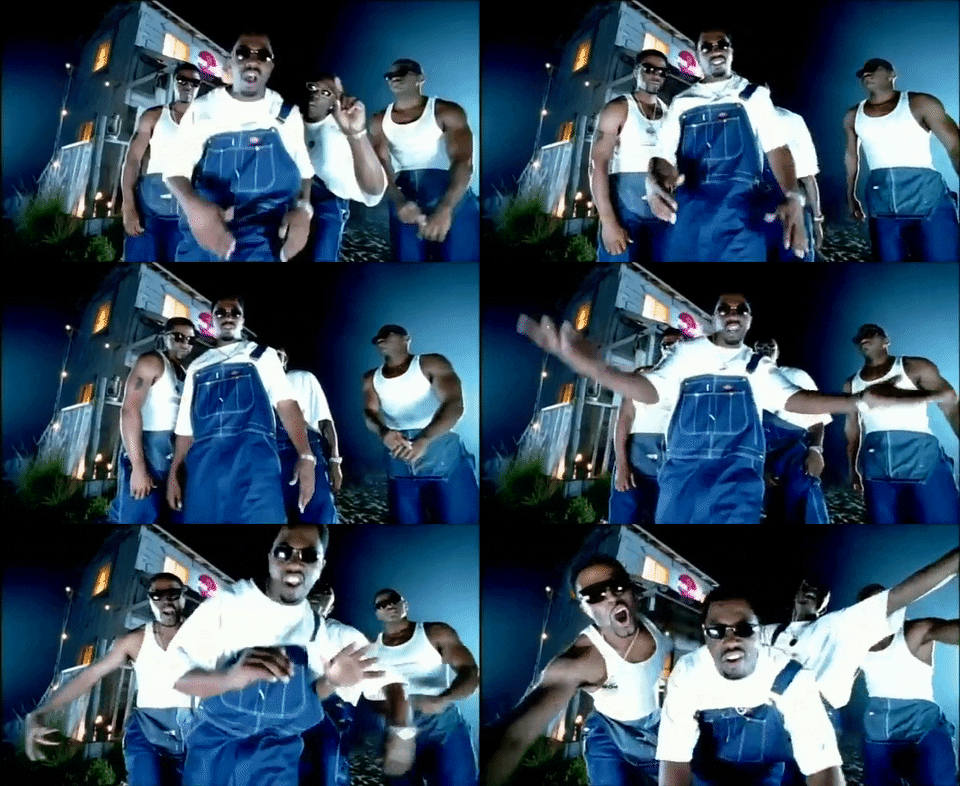
Technical analysis
The musical foundation of “No diggity” demonstrates Teddy Riley’s mastery of New Jack Swing production techniques while incorporating elements that would define R&B for the following decade. The song is built around a distinctive sample from Bill Withers’ “Grandma’s Hands,” which provides both rhythmic and melodic foundation while creating an immediate connection to soul music’s golden age. The harmonic structure employs a relatively simple chord progression that allows space for the complex rhythmic interplay between drums, bass, and sampled elements. The key signature and tempo create an ideal framework for both singing and rapping, demonstrating Riley’s understanding of how to create music that serves multiple vocal styles simultaneously. The song’s arrangement showcases sophisticated layering techniques, with different instrumental elements entering and exiting to create dynamic variation throughout the track. The bass line functions as both rhythmic and melodic element, providing forward momentum while supporting the harmonic structure. Guitar elements are used sparingly but effectively, adding texture without overwhelming the vocal elements. The drum programming combines live and programmed elements to create a rhythmic foundation that feels both organic and precisely controlled. Synthesizer work provides atmospheric elements that enhance the song’s mood without dominating the mix. The overall musical architecture demonstrates how sampling can be used not just as a shortcut to interesting sounds, but as a compositional tool that creates new musical meaning through creative recontextualization. The technical sophistication of the production reveals itself through repeated listening, as subtle details and musical relationships become apparent over time.
Instrumentation breakdown
The instrumentation of “No diggity” reflects the sophisticated production techniques that characterized mid-1990s R&B while incorporating elements that would influence the genre’s future direction. The drum kit combines programmed and live elements, with the kick drum providing a deep, resonant foundation that anchors the entire arrangement. The snare drum features the crisp, cutting sound that became synonymous with New Jack Swing production, while hi-hats create rhythmic complexity through subtle variations in timing and dynamics. The bass guitar work, whether live or programmed, provides both rhythmic drive and melodic interest, with lines that support the harmonic structure while creating forward momentum. Keyboard elements include both sampled and synthesized sounds, with the Bill Withers sample providing the primary melodic content while additional keyboard parts add harmonic depth and textural interest. Guitar work appears selectively throughout the arrangement, providing rhythmic accents and melodic counterpoints without overwhelming the vocal elements. The use of vocal samples and vocal arrangements creates additional layers of instrumentation, with background vocals functioning as both harmonic support and rhythmic elements. Electronic elements, including synthesizers and drum machines, are integrated seamlessly with live instrumentation to create a cohesive sound palette. The production technique of layering multiple instrumental elements creates a rich sonic landscape that supports the song’s complex vocal arrangements. Each instrumental element serves a specific function within the overall arrangement, demonstrating the careful attention to detail that characterizes professional-level production. The instrumentation reflects the collaborative nature of the song, with different elements representing different musical traditions and approaches.
Vocal analysis
The vocal performances in “No diggity” demonstrate the sophisticated approach to vocal arrangement that characterized the best R&B production of the 1990s. Dr. Dre’s opening verse showcases his distinctive delivery style, with clear articulation and rhythmic precision that establishes the song’s confident tone. His vocal approach combines elements of rapping and singing, creating a hybrid style that would influence countless artists in subsequent years. The transition between Dre’s verse and the Blackstreet chorus demonstrates sophisticated vocal arrangement, with the handoff creating seamless musical flow. The chorus vocals feature tight harmonies and precise timing, with lead and background vocals creating a rich harmonic landscape. The use of call-and-response elements throughout the song creates dynamic interest while maintaining the collaborative spirit that defines the track. Queen Pen’s verse presents a different vocal approach, with rapid-fire delivery and complex rhythmic patterns that demonstrate her technical skill while maintaining musical coherence. Her vocal style contrasts effectively with the male voices, creating textural variety that enhances the song’s overall impact. The vocal production techniques include careful use of reverb and delay effects that enhance the spatial quality of the vocals without overwhelming their natural character. Background vocal arrangements create both harmonic support and rhythmic interest, with vocal parts functioning as additional instrumental elements. The overall vocal approach balances technical precision with emotional authenticity, creating performances that serve both the song’s commercial and artistic goals. The vocal interplay between different artists creates a conversational quality that supports the song’s themes of mutual respect and recognition.
Production techniques
The production of “No diggity” represents a masterclass in mid-1990s R&B production techniques, showcasing Teddy Riley’s innovative approach to creating contemporary urban music. The sampling technique used to incorporate Bill Withers’ “Grandma’s Hands” demonstrates sophisticated understanding of how to use existing musical material as a foundation for new creative work. The sample is not simply looped but is manipulated and recontextualized to create new musical meaning while respecting the original source material. The drum programming combines multiple layers of rhythmic elements, creating complex polyrhythmic patterns that support the song’s groove while providing space for vocal elements. The use of compression and EQ throughout the mix creates the punchy, immediate sound that characterizes the best R&B production of the period. The spatial arrangement of instruments within the stereo field creates a sense of depth and dimension that enhances the listening experience. The production approach balances clarity with warmth, ensuring that all elements remain audible while maintaining the organic feel that connects the song to its musical roots. The integration of live and programmed elements demonstrates sophisticated understanding of how to combine different recording techniques to achieve specific sonic goals. The overall production philosophy emphasizes serving the song rather than showcasing technical prowess, resulting in a mix that supports the musical and lyrical content while creating commercial appeal.
Cultural and social context
Historical context
The release of “No diggity” in 1996 occurred during a pivotal moment in American cultural history, as the country was experiencing significant social and economic changes that would shape the remainder of the decade. The mid-1990s represented a period of economic prosperity and technological advancement, with the emergence of the internet and digital media beginning to transform how Americans consumed and shared music. The song appeared during the height of the East Coast-West Coast hip-hop rivalry, making the collaboration between Blackstreet and Dr. Dre particularly significant as a bridge between different musical communities. The Clinton administration’s policies had created a period of relative economic stability, which contributed to increased consumer spending on entertainment and music. The rise of cable television and MTV had created new opportunities for music promotion and artist development, influencing how songs like “No diggity” could reach mainstream audiences. The song’s success coincided with broader cultural conversations about race, sexuality, and urban culture, as hip-hop was beginning to gain mainstream acceptance while maintaining its roots in African American communities. The technological advances in music production, including digital sampling and computer-based recording, had created new possibilities for artists to create sophisticated music with relatively modest resources. The song’s release also occurred during a period of increased collaboration between different musical genres, as artists began to recognize the commercial and artistic benefits of cross-genre partnerships. The cultural landscape of the mid-1990s provided an ideal environment for a song that celebrated urban culture while maintaining broad commercial appeal.
Artist’s personal context
Teddy Riley’s personal journey to creating “No diggity” reflects the broader evolution of R&B and hip-hop music during the 1990s. As the architect of New Jack Swing, Riley had already established himself as a visionary producer who could bridge different musical worlds, but “No diggity” represented his most successful attempt to create music that honored both traditional R&B and contemporary hip-hop. His experiences working with artists like Keith Sweat, Bobby Brown, and Michael Jackson had given him insight into what made songs commercially successful while maintaining artistic integrity. The formation of Blackstreet represented Riley’s desire to create a group that could serve as a vehicle for his most sophisticated musical ideas while providing a platform for his production innovations. His decision to collaborate with Dr. Dre reflected his understanding of the changing musical landscape and his willingness to embrace new creative partnerships. Riley’s personal experiences growing up in New York and later working in various musical centers had given him a broad perspective on American urban culture that informed his approach to creating “No diggity.” The song’s success validated his belief that audiences were ready for music that combined different musical traditions while maintaining authentic connections to urban culture. His personal commitment to musical innovation and cultural authenticity provided the foundation for creating a song that would influence R&B production for years to come. The collaborative spirit that characterized the song’s creation reflected Riley’s personal philosophy about music as a communal art form that brings together different voices and perspectives.
Societal impact
“No diggity” had a profound impact on American popular culture, influencing not only musical trends but also broader cultural conversations about collaboration, authenticity, and urban culture. The song’s success helped establish the template for future R&B-hip-hop collaborations, demonstrating that artists from different musical backgrounds could work together to create music that respected both traditions while reaching new audiences. Its influence extended beyond music to affect fashion, dance, and urban culture more broadly, with the song’s aesthetic and attitude becoming part of the cultural zeitgeist of the late 1990s. The song’s celebration of female empowerment and independence contributed to broader cultural conversations about gender roles and relationships, presenting a model of mutual respect that was relatively uncommon in popular music of the period. Its success also helped validate the commercial viability of urban culture and street-smart sensibility, contributing to the mainstream acceptance of hip-hop culture that would accelerate in the following decade. The song’s impact on radio programming and music video production influenced how similar artists would present themselves and their music to mainstream audiences. Its success demonstrated the power of authentic collaboration to create music that transcended traditional genre boundaries while maintaining commercial appeal. The song’s influence on subsequent R&B and hip-hop production can be heard in countless songs that followed, as artists and producers sought to replicate its successful formula of combining different musical elements while maintaining thematic coherence. The cultural impact of “No diggity” extended far beyond its commercial success, helping to shape American popular culture in ways that continue to resonate today.
Legacy and covers
The legacy of “No diggity” extends far beyond its initial commercial success, as the song has been covered, sampled, and referenced by numerous artists across different genres and generations. Notable covers include versions by artists ranging from indie rock bands to contemporary R&B performers, each bringing their own interpretation to the song’s distinctive melody and lyrical content. The song’s influence on subsequent R&B and hip-hop production can be heard in countless tracks that have borrowed its formula of combining soulful samples with contemporary urban production techniques. Its impact on music video aesthetics and visual presentation has influenced how artists present themselves and their music to mainstream audiences, with the song’s visual style becoming a template for urban contemporary artists. The song’s sampling of Bill Withers’ “Grandma’s Hands” has introduced new generations of listeners to classic soul music, demonstrating how contemporary artists can serve as cultural bridges between different musical eras. Its influence on collaborative approaches to music-making has encouraged countless artists to seek out partnerships across genre boundaries, contributing to the increasingly fluid nature of contemporary popular music. The song’s continued presence in popular culture through film soundtracks, television appearances, and advertising campaigns demonstrates its enduring appeal and cultural significance. Its legacy includes not only its direct musical influence but also its contribution to broader cultural conversations about collaboration, authenticity, and urban culture. The song’s enduring popularity on streaming platforms and social media demonstrates its continued relevance to new generations of listeners who discover its innovative approach to combining different musical traditions.
Philosophical comparison
Western philosophy connections
The themes explored in “No diggity” connect meaningfully with several major concepts in Western philosophical tradition, particularly those related to authenticity, recognition, and interpersonal relationships. The song’s emphasis on “no diggity” and “no doubt” reflects philosophical concerns about authentic being and genuine expression that echo existentialist themes found in the work of thinkers like Jean-Paul Sartre and Simone de Beauvoir. The concept of mutual recognition that runs throughout the song aligns with Hegelian ideas about the development of self-consciousness through interaction with others, particularly the notion that true self-awareness emerges through recognition by and of others. The song’s celebration of competence and professional skill connects with Aristotelian concepts of virtue and excellence, suggesting that attraction and respect should be based on genuine qualities rather than superficial characteristics. The emphasis on authenticity and genuine connection reflects philosophical traditions that value honest communication and authentic relationships over superficial social interactions. The song’s treatment of relationships as partnerships between equals connects with feminist philosophical traditions that emphasize mutuality and respect in interpersonal relationships. The celebration of urban culture and street knowledge reflects philosophical traditions that challenge traditional hierarchies of knowledge and value, suggesting that wisdom and competence can be found in non-traditional contexts. The song’s approach to collaboration and creative partnership reflects philosophical ideas about the collective nature of human achievement and the importance of community in personal development. The underlying philosophical framework of the song suggests a worldview that values authenticity, mutual respect, and genuine connection over superficial attraction or material success alone.
Eastern philosophy connections
The philosophical themes in “No diggity” also resonate with several key concepts from Eastern philosophical traditions, particularly those related to harmony, balance, and interconnectedness. The song’s emphasis on collaboration and mutual recognition reflects Buddhist concepts of interdependence and the understanding that individual achievement is always connected to broader community and relationships. The balance between different musical elements and voices in the song mirrors Taoist principles of harmony and the dynamic balance between opposing forces, with the interplay between R&B and hip-hop elements creating a unified whole. The song’s celebration of authentic expression and genuine connection aligns with Zen Buddhist concepts of authenticity and the importance of being true to one’s nature rather than conforming to external expectations. The emphasis on present-moment awareness and appreciation, evident in lines like “I like the way you work it,” reflects mindfulness practices that emphasize paying attention to immediate experience rather than being distracted by past or future concerns. The song’s treatment of relationships as dynamic processes rather than static states connects with Eastern concepts of impermanence and the understanding that all relationships are constantly changing and evolving. The celebration of different forms of knowledge and competence reflects Eastern philosophical traditions that recognize multiple paths to wisdom and understanding. The song’s approach to creative collaboration mirrors Eastern concepts of collective achievement and the understanding that individual success is always connected to broader community support. The underlying philosophical framework suggests an understanding of life as interconnected and collaborative, with success and fulfillment emerging through authentic relationships and mutual recognition rather than individual achievement alone.
Religious and spiritual themes
While “No diggity” is primarily a secular love song, it contains several references and themes that connect with religious and spiritual traditions, particularly those related to celebration, community, and authentic relationships. The song’s emphasis on truth and authenticity, evident in phrases like “no diggity” and “as real as can be,” reflects spiritual traditions that value honesty and genuine expression as fundamental virtues. The celebration of community and collective achievement, particularly evident in the song’s collaborative structure and the final verses that acknowledge various individuals, connects with religious traditions that emphasize the importance of community and mutual support. The song’s treatment of relationships as based on mutual respect and recognition reflects spiritual teachings about the importance of seeing the divine or sacred in others rather than treating them as objects. The emphasis on appreciation and gratitude, evident throughout the song’s celebratory tone, aligns with spiritual practices that emphasize thankfulness and recognition of life’s gifts. The song’s approach to material success and achievement reflects spiritual traditions that see prosperity as a blessing to be shared rather than hoarded, with the collaborative nature of the song suggesting a generous approach to success. The celebration of different forms of knowledge and competence connects with spiritual traditions that recognize wisdom in unexpected places and value practical knowledge alongside formal education. The song’s underlying message about authentic connection and mutual recognition reflects spiritual teachings about the importance of genuine relationships and community in human flourishing. While not explicitly religious, the song’s values and themes align with many spiritual traditions that emphasize authenticity, community, and mutual respect as fundamental aspects of meaningful life.
Psychological perspectives
From a psychological perspective, “No diggity” presents several interesting themes related to attraction, self-esteem, and interpersonal relationships that connect with various psychological theories and research findings. The song’s emphasis on competence and skill as sources of attraction aligns with research on mate selection that suggests people are drawn to partners who demonstrate ability and resourcefulness. The mutual recognition and respect portrayed in the song reflects psychological research on healthy relationships that emphasizes the importance of seeing and appreciating each other’s strengths and capabilities. The song’s celebration of confidence and self-assurance connects with psychological theories about self-esteem and its role in forming successful relationships, suggesting that attraction is enhanced when both partners feel secure in their own worth and abilities. The collaborative nature of the song itself reflects psychological research on creativity and teamwork that suggests the best creative work often emerges from partnerships that respect and build on each participant’s unique contributions. The song’s treatment of relationships as dynamic processes rather than static states aligns with psychological understanding of relationship development and the importance of ongoing communication and mutual adjustment. The emphasis on authenticity and genuine expression reflects psychological research on well-being that suggests people are happiest when they can be true to themselves in their relationships and social interactions.
Conclusion
Summary of findings
The comprehensive analysis of “No diggity” reveals a song that operates on multiple levels simultaneously, combining sophisticated musical production with thoughtful lyrical content and innovative collaborative approaches. The song’s success stems from its ability to bridge different musical traditions while maintaining authentic connections to urban culture and contemporary social concerns. The technical analysis demonstrates Teddy Riley’s mastery of production techniques that combine traditional R&B elements with contemporary hip-hop influences, creating a sound that was both familiar and innovative. The lyrical analysis reveals sophisticated themes about authenticity, mutual respect, and collaborative relationships that transcend typical romantic song conventions. The cultural and social context analysis shows how the song emerged from and contributed to broader cultural conversations about collaboration, urban culture, and changing relationship dynamics. The philosophical connections demonstrate how popular music can engage with deep human concerns about authenticity, recognition, and meaningful relationships. The song’s lasting impact and continued relevance suggest that its themes and musical innovations continue to resonate with new generations of listeners. The collaborative nature of the song, involving artists from different musical backgrounds and traditions, created a template for future cross-genre partnerships that would become increasingly common in popular music. The song’s success in both commercial and artistic terms demonstrates that audiences are receptive to music that combines innovation with authenticity, sophistication with accessibility. The analysis reveals “No diggity” as a significant achievement in American popular music that continues to influence artists and producers more than two decades after its release.
Personal interpretation
“No diggity” represents a unique moment in American popular music when artists successfully transcended traditional genre boundaries to create something that was both commercially successful and artistically innovative. The song’s most striking quality is its genuine celebration of mutual respect and recognition, presenting a model of relationships that was relatively uncommon in popular music of the period. The collaborative nature of the song, bringing together artists from different musical backgrounds and traditions, creates a sense of community and shared achievement that extends beyond the music itself. The song’s treatment of attraction and desire as based on competence and authenticity rather than superficial qualities suggests a mature understanding of human relationships that resonates across different cultural contexts. The production techniques used in the song demonstrate how sampling and creative recontextualization can create new musical meaning while respecting existing traditions, providing a model for how contemporary artists can build on past achievements while creating something entirely new. The song’s enduring popularity suggests that its themes of authenticity, collaboration, and mutual respect continue to resonate with audiences who are seeking alternatives to more superficial or exploitative approaches to relationships and creative work. The song’s influence on subsequent music demonstrates how a single creative work can shape cultural conversations and artistic approaches across multiple generations. The overall achievement of “No diggity” lies in its ability to create music that is both deeply rooted in specific cultural traditions and broadly accessible to diverse audiences, providing a template for how popular music can serve both artistic and social goals simultaneously.
Critical evaluation
As a work of popular music, “No diggity” succeeds remarkably well in achieving its multiple objectives of commercial success, artistic innovation, and cultural impact. The song’s artistic merit lies primarily in its sophisticated production techniques and thoughtful approach to collaboration, which create a musical experience that rewards both casual listening and detailed analysis. The lyrical content, while operating within the conventions of popular music, presents themes and perspectives that are more complex and mature than typical romantic songs of the period. The vocal performances are consistently strong, with each artist contributing their unique voice while maintaining the song’s overall coherence and collaborative spirit. The production quality represents the best of mid-1990s R&B production, with careful attention to detail and sophisticated use of available technology to create a lasting musical statement. The song’s greatest strength lies in its ability to combine innovation with accessibility, creating music that pushes artistic boundaries while remaining immediately appealing to mainstream audiences. The collaborative approach to creating the song results in a work that is greater than the sum of its parts, with each contributor enhancing the others’ contributions rather than competing for attention. The song’s lasting influence on popular music demonstrates its significance as both a commercial product and an artistic statement that continues to inspire new generations of musicians and producers. The critical assessment must acknowledge the song’s success in creating a work that functions effectively on multiple levels while maintaining artistic integrity and cultural authenticity. The song’s enduring appeal and continued relevance suggest that its artistic achievements extend far beyond its initial commercial success.
 be-song-be-you.com
Leave a comment