Freak on a leash by Korn – Complete song analysis
Introduction
Thesis statement
“Freak on a Leash” by Korn represents a seminal work in the nu-metal genre that explores themes of psychological imprisonment, emotional alienation, and the struggle for personal autonomy within American society’s constraints. The song’s central argument revolves around the metaphor of being controlled like an animal on a leash, representing the various forces that manipulate and constrain individual freedom. Through its aggressive musical composition and raw, confessional lyrics, the track articulates the frustration of feeling trapped within systems of power while simultaneously expressing the desperate need for liberation. The song’s innovative approach to combining heavy metal with alternative rock elements creates a sonic landscape that mirrors the psychological turmoil described in the lyrics. This analysis will demonstrate how “Freak on a Leash” functions as both a personal outcry against psychological oppression and a broader commentary on societal control mechanisms. The work’s enduring impact on American music culture stems from its ability to give voice to feelings of powerlessness that resonated with an entire generation coming of age in the late 1990s.
Brief introduction to the song and artist
Korn emerged from Bakersfield, California in the early 1990s, pioneering a sound that would define nu-metal for the following decade. The band consisted of Jonathan Davis on vocals, James “Munky” Shaffer and Brian “Head” Welch on guitars, Reginald “Fieldy” Arvizu on bass, and David Silveria on drums. Their innovative approach combined elements of metal, funk, hip-hop, and alternative rock, creating a distinctive sound that challenged traditional genre boundaries. Jonathan Davis’s background in mortuary science and his personal struggles with childhood trauma heavily influenced the band’s dark, introspective lyrical content. The band’s name itself, stylized as “KoЯn,” reflected their desire to stand apart from conventional metal acts. Their previous albums had already established them as leaders in the emerging nu-metal movement, with their self-titled debut and “Life Is Peachy” gaining significant underground and mainstream attention. By 1998, Korn had become one of the most influential bands in American alternative metal, known for their experimental approach to heavy music and their willingness to address psychological and social issues through their art.
Context of the song’s creation and release
“Freak on a Leash” was created during a period of intense personal and professional growth for Korn, emerging from sessions for their third studio album “Follow the Leader” in 1998. The late 1990s American cultural landscape was characterized by economic prosperity coupled with underlying social tensions, including concerns about corporate control, media manipulation, and individual alienation. The band wrote and recorded the song during a time when alternative rock was dominating mainstream radio, with bands like Nirvana, Pearl Jam, and Soundgarden having paved the way for more experimental and emotionally raw music. The Clinton administration’s focus on youth culture and the rise of MTV as a cultural force created an environment where bands like Korn could reach massive audiences with their unconventional approach. The song was produced by Steve Thompson, Toby Wright, and Korn themselves, representing a collaborative effort that allowed the band to maintain creative control while achieving commercial polish. The recording process took place at NRG Recording Studios in Hollywood, where the band experimented with various sound textures and recording techniques that would become hallmarks of their sound.
Overview of the song’s reception and impact
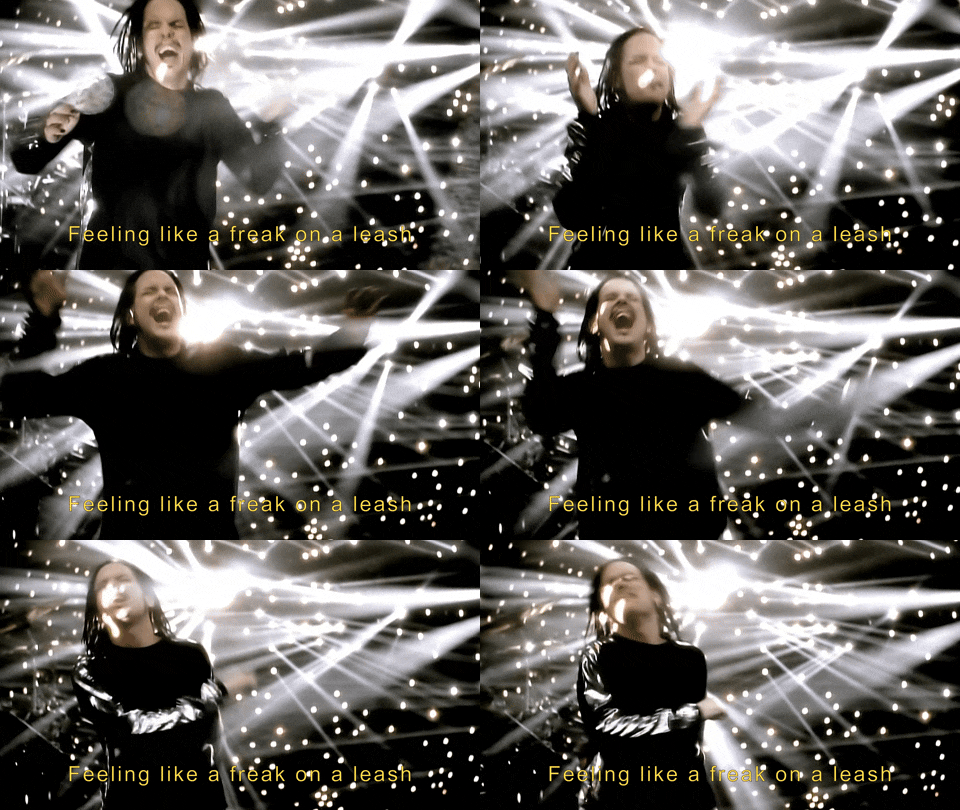
“Freak on a Leash” achieved remarkable commercial success in the American market, reaching number 6 on the Billboard Modern Rock Tracks chart and number 10 on the Mainstream Rock chart. The song’s music video, featuring innovative animation mixed with live-action footage, won MTV’s Video Music Award for Best Rock Video in 1999, cementing its place in American pop culture. The track’s radio-friendly yet aggressive sound helped introduce nu-metal to mainstream audiences, paving the way for other bands in the genre to achieve commercial success. American music critics initially had mixed reactions to the song, with some praising its innovative approach while others criticized its aggressive sound and dark themes. However, the song’s impact on American youth culture was undeniable, with its themes of alienation and control resonating strongly with Generation X and early millennials. The track’s success helped establish Korn as one of the most important American metal bands of the 1990s, influencing countless musicians and contributing to the broader alternative rock movement. Its enduring popularity is evidenced by its continued radio play and streaming numbers, maintaining relevance with new generations of listeners decades after its release.
Lyrical analysis
Breakdown of the song’s lyrics
The opening verse immediately establishes the song’s central theme of loss and violation: “Something takes a part of me / Something lost and never seen.” This repetitive structure creates a hypnotic quality that mirrors the cyclical nature of psychological trauma. The use of “something” as an ambiguous force suggests an inability to identify or confront the source of pain, reflecting the helplessness many feel when dealing with systemic oppression or personal demons. The line “Every time I start to believe / Something’s raped and taken from me” introduces violent imagery that transforms abstract emotional theft into visceral, physical violation. This metaphor powerfully communicates the devastating impact of repeated disappointment and betrayal. The chorus sections alternate between expressions of constraint and desire for freedom, with phrases like “Life’s gotta always be messing with me” suggesting a fatalistic view of existence. The parenthetical responses “(you wanna see the light)” create a dialogue between the suffering self and either an external voice or internal conscience, adding layers of complexity to the emotional landscape. The bridge section’s nonsensical vocalizations (“Boom-da-da-mmm-dum-na-ee-ma”) represent a breakdown of language itself, suggesting that conventional communication fails to express the depth of psychological pain. This linguistic dissolution mirrors the fragmenting effect of trauma on consciousness and identity.
Top five most used words in the lyrics
The five most frequently used words in “Freak on a Leash” reveal the song’s core obsessions and thematic concerns. “Something” appears most frequently, emphasizing the unknown and uncontrollable forces that shape the narrator’s experience. This word choice reflects the difficulty of identifying specific sources of pain in a complex modern world where oppression often operates through subtle, systemic mechanisms. “Me” appears as the second most common word, highlighting the intensely personal nature of the struggle described. The emphasis on self-reference creates an intimate, confessional quality that invites listeners to identify with the narrator’s experience. “Part” ranks third, connecting to the central metaphor of being dismantled or consumed by external forces. This word suggests both physical and psychological fragmentation, reflecting the way trauma can leave individuals feeling incomplete or divided. “Fight” appears frequently, particularly in the bridge section, indicating resistance and struggle against oppressive forces. The repetition of this word creates a mantric quality that suggests both determination and desperation. “Take” rounds out the top five, connecting to themes of theft, violation, and loss of agency. Together, these words create a semantic field centered on struggle, identity, and the battle between self-determination and external control.
Exploration of themes and motifs
The primary theme of “Freak on a Leash” centers on the metaphor of psychological imprisonment, with the “leash” representing various forms of control that constrain individual freedom. This central motif connects to broader themes of alienation, powerlessness, and the struggle for authentic self-expression in modern society. The song explores the tension between the desire for liberation and the reality of systemic control, reflecting concerns about corporate manipulation, media influence, and social conformity that were particularly relevant in 1990s America. A secondary theme involves the cyclical nature of trauma and disappointment, with the repetitive lyrical structure mirroring the way negative experiences can become patterns that seem impossible to break. The song also examines the breakdown of communication and meaning, particularly in the bridge section where language dissolves into primal sounds. This reflects the inadequacy of conventional expression when dealing with profound psychological pain. The motif of theft and violation appears throughout, suggesting that the narrator’s suffering stems not from natural causes but from deliberate acts of taking and control. These themes combine to create a portrait of modern existential crisis, where individuals struggle to maintain identity and agency in the face of overwhelming external pressures.
Use of literary devices
“Freak on a Leash” employs several sophisticated literary devices to enhance its emotional impact and thematic resonance. Metaphor serves as the primary device, with the “leash” image transforming abstract concepts of control into concrete, visceral imagery that listeners can immediately understand. The song uses extensive repetition, both in individual lines and structural patterns, creating a hypnotic effect that mirrors the cyclical nature of trauma and obsessive thinking. Alliteration appears in phrases like “fall from grace” and “cheap fuck,” creating sonic connections that enhance the musical quality of the lyrics. The use of personification transforms abstract forces into active agents, as in “Life’s gotta always be messing with me,” giving personality to impersonal systems of oppression. Rhetorical questions throughout the song (“Can’t they chill and let me be free?”) create a sense of dialogue and internal debate, suggesting the narrator’s struggle to understand their situation. The bridge section employs onomatopoeia and glossolalia, using sound itself as a literary device to express emotions beyond the capacity of conventional language. These devices work together to create a complex emotional landscape that operates on both intellectual and visceral levels, allowing the song to communicate experiences that might otherwise remain inexpressible.
Emotional journey mapping
The emotional journey of “Freak on a Leash” follows a trajectory from suffering through anger to ultimate exhaustion and resignation. The opening verse establishes a state of chronic pain and loss, with the narrator acknowledging ongoing violation and theft of their essential self. The first chorus introduces elements of frustration and questioning, as the narrator begins to challenge the forces controlling them. The second verse deepens the sense of alienation with phrases like “Sometimes I cannot feel my face,” suggesting dissociation and numbness. The bridge section represents a complete breakdown of rational expression, with the narrator abandoning language for primal sounds that convey raw emotion. The final verse and chorus return to the original themes but with a sense of weary acceptance, as if the narrator has exhausted their capacity for resistance. This emotional arc reflects the psychological journey many experience when dealing with chronic oppression or trauma, moving from initial resistance through anger to eventual numbness and acceptance.
Musical composition
Technical analysis
“Freak on a Leash” demonstrates Korn’s innovative approach to heavy music through its unconventional instrumentation and arrangement. The song is primarily composed in the key of A minor, utilizing a 4/4 time signature with occasional metric variations that create rhythmic tension. The main riff centers around the low A string tuned down to G, creating the characteristic heavy sound that defines nu-metal. James Shaffer’s guitar work employs a seven-string instrument tuned ADGCFAD, allowing for extended range and deeper bass notes that complement Fieldy’s percussive bass style. The song’s structure follows a modified verse-chorus format with an extended bridge section featuring experimental vocals and rhythmic patterns. Harmonic progressions rely heavily on minor tonalities and dissonant intervals, creating a sense of unresolved tension that mirrors the lyrical themes. The vocal melody incorporates both traditional singing and aggressive screaming, with Jonathan Davis utilizing his full vocal range to convey emotional intensity. Rhythmic elements include syncopated patterns and polyrhythmic sections that create complexity without sacrificing groove. The song’s arrangement features dynamic contrasts between heavy, distorted sections and cleaner, more melodic passages, creating an emotional ebb and flow that supports the lyrical narrative. Production techniques include heavy use of compression and effects processing to create the signature “wall of sound” that became synonymous with nu-metal. These technical elements combine to create a sonic landscape that is both aggressive and melodic, innovative and accessible.
Instrumentation breakdown
The instrumentation of “Freak on a Leash” showcases each band member’s unique contribution to Korn’s distinctive sound. Jonathan Davis’s vocals serve as the primary melodic instrument, incorporating techniques from singing and screaming to beatboxing and experimental vocalizations. His approach combines elements of metal, R&B, and alternative rock, creating a style that was revolutionary for heavy music in the 1990s. James “Munky” Shaffer’s seven-string guitar provides the main harmonic foundation, utilizing down-tuned strings to create deep, resonant chord voicings and riffs that became templates for the nu-metal genre. Brian “Head” Welch’s guitar work complements Shaffer’s with additional texture and harmony, often employing effects pedals and alternate tunings to create atmospheric elements. Reginald “Fieldy” Arvizu’s bass guitar technique revolutionized the instrument’s role in heavy music, using a percussive, clicking tone that functions more like a rhythm instrument than a traditional bass. His approach involves heavy string dampening and precise timing that creates a unique rhythmic pocket. David Silveria’s drumming provides the backbone of the song’s rhythm, incorporating elements of rock, funk, and metal with precise timing and dynamic variation. His kit setup includes traditional drums enhanced with electronic elements and samples that add texture and complexity to the overall sound.
Vocal analysis
Jonathan Davis’s vocal performance on “Freak on a Leash” represents a masterclass in emotional expression through diverse vocal techniques. His approach combines clean singing with aggressive screaming, creating dynamic contrasts that mirror the song’s emotional journey. The verses feature a more melodic, almost crooning style that draws from R&B and alternative rock traditions, allowing the lyrics to be clearly understood while maintaining emotional intensity. The chorus sections introduce more aggressive elements, with Davis’s voice becoming more strained and urgent as he expresses frustration and pain. His use of vocal fry and growling techniques adds texture and rawness to the performance, creating an authentically emotional delivery. The bridge section showcases Davis’s most experimental vocal work, featuring beatboxing elements and nonsensical vocalizations that push the boundaries of conventional singing. His vocal range spans from low, guttural tones to high, piercing screams, demonstrating technical versatility in service of emotional expression. Davis’s phrasing and rhythm work closely with the instrumental sections, creating a unified musical experience where vocals and instruments complement each other. His use of space and silence is equally important, allowing moments of restraint that make the aggressive sections more impactful. The overall vocal performance creates a sense of vulnerability and power simultaneously, reflecting the complex emotions explored in the lyrics.
Production techniques
The production of “Freak on a Leash” employs several innovative techniques that became standard in nu-metal production. Heavy compression and limiting create the characteristic “wall of sound” that gives the track its massive presence and radio-friendly loudness. The guitar tones utilize a combination of high-gain amplifiers and effects processing to create a thick, saturated sound that maintains clarity despite its heaviness. Fieldy’s bass sound is achieved through specific string types, amplifier settings, and post-production processing that creates his signature percussive tone. The drum sound incorporates both acoustic and electronic elements, with samples and triggers enhancing the natural drum kit to create a more powerful and consistent sound. Vocal processing includes various effects such as reverb, delay, and distortion that enhance the emotional impact of different sections. The mix balances aggressive elements with melodic clarity, ensuring that both the heaviest and most subtle parts of the song remain audible and impactful. These production choices create a sonic landscape that supports the song’s themes while maintaining commercial appeal.
Cultural and social context
Historical context
“Freak on a Leash” emerged during a pivotal period in American cultural history, released in 1998 during the height of the Clinton administration’s second term. The late 1990s were characterized by economic prosperity and technological advancement, yet also marked by growing concerns about corporate control, media manipulation, and individual alienation. The Columbine High School shooting in 1999 brought national attention to youth alienation and the potential influence of aggressive music, with nu-metal bands like Korn facing scrutiny for their dark themes and heavy sound. The rise of the internet and digital media was beginning to transform how people consumed music and information, creating new forms of connection and isolation simultaneously. MTV’s continued dominance in youth culture provided a platform for alternative music to reach mainstream audiences, while the consolidation of radio stations limited the diversity of music available to listeners. The song’s release coincided with growing awareness of mental health issues among young people, particularly depression and anxiety, which the lyrics seemed to address directly. The American economy was experiencing unprecedented growth, yet many young people felt disconnected from this prosperity, creating a cultural tension that nu-metal music articulated effectively. The period also saw increased discussion about the effects of consumer culture and advertising on individual identity and self-worth.
Artist’s personal context
Jonathan Davis’s personal experiences heavily influenced the creation of “Freak on a Leash,” drawing from his traumatic childhood and professional background in mortuary science. Davis had experienced physical and sexual abuse as a child, trauma that informed much of Korn’s lyrical content and emotional intensity. His work as a mortician before joining Korn exposed him to death and suffering on a regular basis, contributing to the dark themes that permeate the band’s music. Davis’s struggles with substance abuse and mental health issues provided authentic emotional material for the song’s exploration of feeling controlled and manipulated. His experience of being bullied and ostracized during his youth resonated with many fans who felt similarly alienated from mainstream society. The band members’ working-class backgrounds in Bakersfield, California, a city known for its conservative values and industrial economy, created a sense of being outsiders in the music industry. Davis’s interest in alternative spirituality and psychology influenced his approach to songwriting, incorporating elements of self-analysis and emotional exploration. His experience with Scottish Highland bagpipes, which he incorporated into some Korn songs, demonstrated his willingness to experiment with unconventional instruments and sounds. The band’s collective experience of feeling misunderstood and marginalized in their local music scene contributed to their fierce independence and innovative approach to heavy music.
Societal impact
“Freak on a Leash” significantly influenced American youth culture and music, helping to establish nu-metal as a dominant force in alternative rock. The song’s themes of alienation and control resonated strongly with young people who felt disconnected from traditional authority structures and social expectations. Its success helped legitimize aggressive music with psychological themes, paving the way for other bands to explore similar territory. The track’s music video, featuring innovative animation techniques, influenced visual art and music video production throughout the early 2000s. The song became an anthem for outsiders and misfits, providing a sense of community and validation for those who felt marginalized by mainstream society. Its popularity helped establish heavy music as a legitimate form of artistic expression rather than merely aggressive noise. The track’s commercial success demonstrated that audiences were hungry for authentic emotional content, even when packaged in aggressive musical forms. The song’s influence extended beyond music into fashion, with nu-metal style becoming popular among young people seeking to express their individuality and rebellion. Its themes of corporate control and media manipulation contributed to growing awareness of these issues among American youth. The track’s enduring popularity demonstrates its continued relevance to successive generations dealing with similar feelings of alienation and control.
Legacy and covers
“Freak on a Leash” has maintained its cultural significance through numerous covers and reinterpretations by artists across various genres. The song’s influence can be heard in the work of subsequent nu-metal and alternative metal bands who adopted similar approaches to combining heavy music with experimental elements. Its innovative vocal techniques and production methods became templates for producers and musicians throughout the 2000s and beyond. The track has been covered by artists ranging from death metal bands to acoustic singer-songwriters, demonstrating its versatility and enduring appeal. Its music video’s animation techniques influenced countless other productions, contributing to the evolution of music video as an art form. The song’s themes continue to resonate with new generations of listeners dealing with similar issues of control and alienation in the digital age. Its inclusion in various “greatest songs” lists and retrospective analyses confirms its status as a significant cultural artifact. The track’s influence on fashion and youth culture extended far beyond its initial release, with nu-metal aesthetics continuing to influence alternative culture decades later. Its success helped establish the template for crossing over from underground to mainstream success while maintaining artistic integrity. The song’s legacy includes its role in legitimizing mental health discussions in popular music, helping to destigmatize conversations about psychological struggle and trauma.
Philosophical comparison
Western philosophy connections
“Freak on a Leash” resonates strongly with existentialist themes, particularly those explored by Jean-Paul Sartre and Albert Camus regarding human freedom and alienation. The song’s central metaphor of being controlled “on a leash” directly parallels Sartre’s concept of “bad faith,” where individuals surrender their freedom to external authorities and social expectations. The lyrics’ emphasis on “something” taking parts of the narrator connects to Camus’s exploration of the absurd, where human beings struggle to find meaning in an indifferent universe. The song’s themes of psychological imprisonment align with Michel Foucault’s analysis of how power operates through subtle forms of control rather than overt force. The repeated sense of violation and theft described in the lyrics reflects Marx’s concept of alienation, where individuals become estranged from their own labor and essence under capitalist systems. The narrator’s struggle to maintain identity while being controlled echoes Nietzsche’s discussion of the will to power and the individual’s struggle against conformity. The song’s exploration of cyclical suffering connects to Buddhist-influenced Western philosophy, particularly the concept of samsara as a cycle of suffering caused by attachment and delusion. The breakdown of language in the bridge section relates to postmodern philosophy’s questioning of fixed meaning and the instability of linguistic communication. These philosophical connections demonstrate how the song articulates universal human experiences of freedom, control, and the search for authentic existence.
Eastern philosophy connections
The cyclical nature of suffering described in “Freak on a Leash” closely parallels Buddhist concepts of samsara, the endless cycle of rebirth and suffering caused by attachment and ignorance. The song’s emphasis on “something” repeatedly taking from the narrator reflects the Buddhist understanding of suffering as arising from craving and clinging to impermanent things. The narrator’s inability to identify the source of their pain connects to the Buddhist concept of anatman, or the illusion of a fixed self that suffers. The song’s exploration of feeling controlled and manipulated resonates with Hindu concepts of maya, the illusory nature of external reality that obscures true understanding. The repeated references to being “taken from” and violated align with Taoist principles about the importance of maintaining one’s natural state against artificial constraints and social conditioning. The bridge section’s dissolution of language into primal sounds reflects Zen concepts of moving beyond rational thought to direct experience. The narrator’s struggle with forces beyond their control connects to the Taoist understanding of wu wei, or effortless action in harmony with natural forces. The song’s themes of losing essential parts of oneself relate to Hindu concepts of the true self (atman) being obscured by ego and material concerns. The cyclical structure of the lyrics mirrors the Eastern understanding of time as circular rather than linear, with patterns repeating until enlightenment breaks the cycle.
Religious and spiritual themes
“Freak on a Leash” contains numerous references to spiritual and religious concepts, though often presented in subverted or questioning forms. The phrase “fall from grace” directly invokes Christian theology’s concept of humanity’s separation from divine perfection through sin. The song’s emphasis on something being “raped and taken” suggests a violation of spiritual innocence, paralleling biblical narratives of corruption and loss of paradise. The narrator’s cry for freedom from control resonates with liberation theology’s emphasis on breaking free from oppressive systems. The repeated sense of violation and theft connects to concepts of spiritual warfare found in various religious traditions. The song’s exploration of feeling diseased and contaminated reflects religious concepts of spiritual pollution and the need for purification. The bridge section’s dissolution into primal sounds suggests a return to pre-verbal, possibly pre-fallen states of consciousness. The narrator’s inability to find peace despite trying “every night” parallels the dark night of the soul described in mystical traditions. The song’s themes of powerlessness and surrender, while presented negatively, echo spiritual concepts of ego death and submission to higher power. The cyclical nature of the narrator’s suffering reflects religious understandings of karma and the consequences of actions. The overall tone of lament and petition resembles psalmic literature, where the faithful cry out to God from positions of distress and persecution.
Psychological perspectives
From a psychological standpoint, “Freak on a Leash” can be analyzed through various theoretical frameworks that illuminate its exploration of trauma and control. The song’s emphasis on something repeatedly taking from the narrator aligns with theories of complex PTSD, where ongoing trauma creates patterns of helplessness and fragmentation. The lyrics’ focus on feeling controlled and manipulated resonates with psychological theories about learned helplessness and the ways traumatic experiences can create lasting patterns of powerlessness. The narrator’s inability to identify the source of their pain reflects dissociative responses to trauma, where the mind separates from overwhelming experiences. The song’s cyclical structure mirrors the repetitive nature of traumatic memories and the way they can dominate consciousness. The bridge section’s breakdown of language suggests psychological regression under extreme stress, where rational thought gives way to more primitive forms of expression. The themes of violation and theft connect to psychological understanding of how trauma disrupts normal development and self-concept. The narrator’s struggle with identity and agency reflects attachment theory’s insights into how early relationships shape adult patterns of relating to others and oneself.
Conclusion
Summary of findings
This comprehensive analysis of “Freak on a Leash” reveals a sophisticated artistic work that operates on multiple levels of meaning and cultural significance. The song’s central metaphor of psychological imprisonment resonates across philosophical, religious, and psychological frameworks, demonstrating its universal appeal and enduring relevance. The musical composition showcases innovative techniques that helped define the nu-metal genre while maintaining emotional authenticity and commercial accessibility. The lyrical content effectively articulates experiences of alienation and control that were particularly relevant to 1990s American youth culture but continue to resonate with contemporary audiences. The song’s production techniques and arrangement create a sonic landscape that supports its thematic content while pushing the boundaries of heavy music conventions. The cultural impact extends beyond music into fashion, visual art, and broader discussions about mental health and individual autonomy. The work’s influence on subsequent artists and its continued popularity demonstrate its lasting significance in American popular culture. The philosophical and spiritual themes explored in the lyrics connect to universal human experiences of suffering, control, and the search for authentic existence. The song’s technical innovations in vocal performance, instrumentation, and production became templates for future musicians and producers. These findings confirm “Freak on a Leash” as a significant cultural artifact that effectively captured and articulated the zeitgeist of its era while maintaining timeless relevance.
Personal interpretation
“Freak on a Leash” represents more than just a song about personal struggle; it serves as a mirror for the broader human condition in modern society. The track’s genius lies in its ability to transform specific experiences of trauma and control into universal symbols that resonate across different backgrounds and circumstances. The metaphor of being “on a leash” captures the essence of how various systems – economic, social, psychological – can constrain individual freedom while maintaining the illusion of choice and autonomy. The song’s emotional journey from suffering through anger to resignation reflects not just personal psychological patterns but also broader social and political dynamics where initial resistance gives way to acceptance of oppressive conditions. The breakdown of language in the bridge section suggests that conventional forms of communication are inadequate to express the full scope of human suffering and that sometimes only primal, wordless expression can convey authentic emotion. The cyclical structure of the lyrics mirrors the way traumatic patterns repeat in both individual lives and social systems, creating cycles of oppression that seem impossible to break. The song’s enduring popularity suggests that these themes remain relevant as new generations encounter similar struggles with control, identity, and authentic expression. Ultimately, “Freak on a Leash” succeeds as both a personal confession and a broader social commentary, offering catharsis for listeners while challenging them to examine their own experiences of constraint and liberation.
Critical evaluation
“Freak on a Leash” stands as a remarkable achievement in popular music that successfully balances artistic innovation with commercial appeal and cultural significance. The song’s greatest strength lies in its authentic emotional content, which transforms personal trauma into universal themes that resonate across diverse audiences. The musical composition demonstrates sophisticated understanding of dynamics, rhythm, and texture while maintaining accessibility and memorable melodies. The lyrical content effectively employs metaphor and repetition to create powerful emotional impacts without relying on explicit or gratuitous imagery. The production quality showcases technical excellence while serving the song’s emotional and thematic needs rather than overwhelming them. The work’s cultural impact demonstrates its ability to articulate experiences and emotions that were previously underrepresented in popular music. However, some critics might argue that the song’s aggressive sound and dark themes could be seen as contributing to negative cultural trends or encouraging unhealthy emotional patterns. The repetitive nature of the lyrics, while effective for emotional impact, might be viewed as limiting the song’s intellectual complexity. The heavy reliance on metaphor occasionally obscures specific meaning, potentially limiting the song’s ability to address concrete social or political issues. Despite these potential criticisms, the song’s enduring popularity and continued relevance demonstrate its fundamental success as both an artistic statement and a cultural artifact. The work effectively bridges the gap between underground alternative music and mainstream commercial success while maintaining its integrity and emotional authenticity.
 be-song-be-you.com
Leave a comment